TB-500 Research History
The research history of TB-500 reflects the broader development of peptide science and the growing interest in naturally occurring proteins that influence cellular processes. While TB-500 itself is a synthetic peptide developed for research purposes, its scientific background is closely connected to investigations involving thymosin beta-4 (Tβ4), a naturally occurring peptide found in many tissues throughout the body.
Over several decades, advances in peptide chemistry, analytical technology, and laboratory manufacturing have enabled researchers to better understand peptides like TB-500 and their structural characteristics. Today, TB-500 remains a subject of ongoing laboratory research in areas such as peptide chemistry, cell biology, and molecular science.
The Discovery of Thymosin Beta-4
The scientific story behind TB-500 begins with research into thymosin proteins during the second half of the twentieth century. Scientists studying the thymus gland identified a family of naturally occurring peptides involved in various biological functions. Among these molecules, thymosin beta-4 (Tβ4) became a focus of research because of its widespread presence in mammalian tissues and its interactions with the actin cytoskeleton.
As laboratory techniques improved, researchers continued investigating the structure, distribution, and biological characteristics of thymosin beta-4. These studies laid the foundation for future peptide research and contributed to the development of synthetic peptide analogs designed for laboratory investigation.
Development of Synthetic TB-500
TB-500 was later developed as a synthetic peptide based on an active region of thymosin beta-4. Rather than reproducing the entire naturally occurring protein, researchers designed TB-500 to represent a specific peptide sequence that could be synthesized consistently for laboratory studies.
The development of synthetic peptides such as TB-500 marked an important step in peptide research because they offered greater manufacturing consistency, standardized production methods, and improved reproducibility for experimental work.
Advances in Peptide Manufacturing
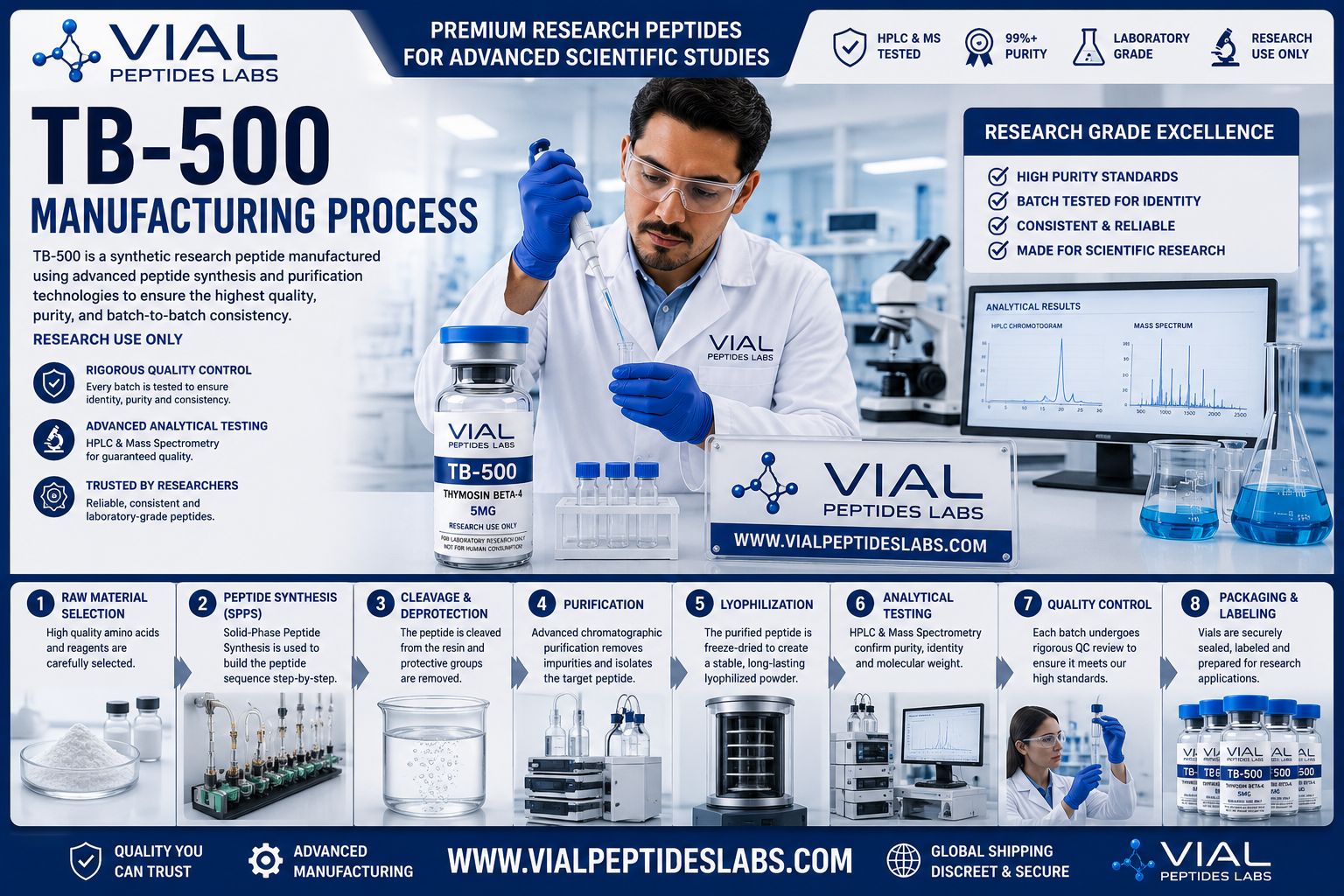
The growth of peptide research has been supported by significant improvements in peptide manufacturing technologies. Modern laboratories use automated solid-phase peptide synthesis (SPPS) to produce highly precise peptide sequences with excellent consistency.
Manufacturing advancements include:
- Automated peptide synthesis
- Improved amino acid coupling efficiency
- Advanced purification methods
- High-performance analytical testing
- Better quality control systems
- Secure sterile packaging
These developments have helped improve the reliability of research peptides supplied to laboratories worldwide.
Growth of Peptide Research
Over the past two decades, peptide science has expanded rapidly across many research disciplines. Scientists continue investigating peptides to better understand their chemical structures, molecular interactions, and potential biological functions.
TB-500 has become part of this broader field of peptide research, where it is examined alongside many other synthetic peptides in controlled laboratory environments. Research focuses on peptide chemistry, molecular biology, cellular mechanisms, and analytical science rather than clinical use.
Modern Analytical Techniques
One of the most significant developments in TB-500 research has been the improvement of analytical testing methods. These technologies allow laboratories to verify peptide identity, purity, and consistency with exceptional accuracy.
Common analytical methods include:
High-Performance Liquid Chromatography (HPLC)
HPLC is widely used to measure peptide purity and detect impurities that may arise during synthesis.
Mass Spectrometry (MS)
Mass spectrometry confirms the molecular weight and identity of synthesized peptides, ensuring they match the intended sequence.
Certificate of Analysis (COA)
A Certificate of Analysis documents the results of analytical testing, providing researchers with detailed information about each production batch.
The Importance of Quality Control
As peptide research has advanced, quality control has become an essential part of modern manufacturing. Reliable suppliers implement strict quality assurance procedures throughout production to maintain batch-to-batch consistency.
Quality control typically includes:
- Raw material inspection
- Manufacturing process monitoring
- Purity verification
- Identity confirmation
- Packaging inspection
- Batch documentation
These measures help support dependable laboratory research and reproducible experimental outcomes.
TB-500 Research Today
Today, TB-500 continues to be supplied exclusively for laboratory research. Researchers study the peptide in controlled scientific environments to expand knowledge of peptide chemistry and molecular biology.
Manufacturers such as Vial Peptides Labs emphasize high-purity synthesis, analytical testing, secure packaging, and comprehensive documentation to support the needs of the research community.
Why Choose Vial Peptides Labs?
At Vial Peptides Labs, quality is central to every stage of peptide production. Our research peptides are manufactured using advanced synthesis technologies and subjected to rigorous analytical testing before release.
Our commitment includes:
- High-purity research peptides
- Advanced manufacturing procedures
- Comprehensive quality control
- HPLC purity testing
- Mass spectrometry verification
- Certificate of Analysis (COA)
- Secure laboratory packaging
- Consistent batch quality
- Professional customer support
Researchers depend on reliable peptide quality, and we are dedicated to maintaining the highest manufacturing standards.
Frequently Asked Questions
What inspired the development of TB-500?
TB-500 was developed based on research involving thymosin beta-4, a naturally occurring peptide studied for its biological properties.
Is TB-500 naturally occurring?
No. TB-500 is a synthetic peptide designed for laboratory research and is based on a sequence derived from thymosin beta-4.
Why is research history important?
Understanding the scientific background of TB-500 provides context for its development, manufacturing, and continued investigation in peptide science.
How has peptide manufacturing improved?
Modern peptide manufacturing uses automated synthesis, advanced purification, and analytical testing to improve consistency and quality.
Why are HPLC and Mass Spectrometry important?
These analytical methods help verify peptide purity, molecular identity, and manufacturing consistency before products are released.
Conclusion
The research history of TB-500 demonstrates the remarkable progress made in peptide science over several decades. From early studies of thymosin beta-4 to the development of synthetic peptides and modern analytical technologies, researchers have significantly advanced the understanding of peptide chemistry and laboratory manufacturing. Today, Vial Peptides Labs continues this commitment by providing high-purity research peptides supported by rigorous quality control, comprehensive analytical testing, and reliable manufacturing standards.
Disclaimer: All products supplied by Vial Peptides Labs are intended for laboratory research purposes only. They are not approved for human consumption, therapeutic use, or veterinary use.