TB-500 Laboratory Handling Guidelines: Best Practices for Safe and Consistent Research
Introduction
Proper TB-500 laboratory handling is essential for maintaining peptide integrity and supporting consistent research outcomes. Every stage of handling—from receiving and storage to preparation and documentation—can influence the quality of research materials. By following standardized laboratory procedures, researchers help reduce contamination risks, preserve peptide stability, and improve experimental reproducibility.
TB-500 is a synthetic research peptide supplied exclusively for laboratory research. It should be handled only by trained personnel working in appropriate research environments using established laboratory protocols.
Why Proper Laboratory Handling Matters
High-quality peptide research depends on careful handling practices. Improper storage, contamination, repeated environmental exposure, or inconsistent laboratory procedures may compromise peptide quality and affect experimental consistency.
Standardized handling procedures help laboratories:
- Maintain peptide integrity
- Reduce contamination risks
- Support batch-to-batch consistency
- Improve research reproducibility
- Protect sample quality during storage
- Strengthen laboratory quality assurance
Implementing clear handling guidelines is an important component of every peptide research program.
Receiving TB-500 in the Laboratory
Upon arrival, each TB-500 shipment should be inspected before use.
Laboratory personnel should verify:
- Product labeling
- Batch or lot number
- Packaging condition
- Certificate of Analysis (COA)
- Manufacturing documentation
- Storage recommendations
Documenting incoming materials helps maintain complete laboratory records and supports inventory management.
Appropriate Laboratory Storage
Correct storage conditions help preserve TB-500 throughout its shelf life.
General laboratory recommendations include:
- Store in a cool, dry environment.
- Protect from excessive heat.
- Keep vials tightly sealed.
- Avoid unnecessary moisture exposure.
- Protect from prolonged direct light.
- Minimize repeated temperature fluctuations.
Lyophilized TB-500 generally offers greater long-term stability than peptide solutions when stored under appropriate laboratory conditions.
Preventing Contamination
Maintaining sterility is a fundamental aspect of peptide handling.
Laboratories should:
- Wear clean laboratory gloves.
- Use sterile laboratory equipment.
- Work on sanitized laboratory surfaces.
- Avoid direct contact with vial openings.
- Use sterile pipettes and laboratory tools.
- Close containers immediately after handling.
Following aseptic techniques helps preserve peptide quality and reduces the likelihood of introducing contaminants.
Handling During Preparation
When preparing TB-500 for laboratory research, personnel should follow validated laboratory procedures appropriate for their research protocols.
Best practices include:
- Prepare materials in a clean laboratory environment.
- Use calibrated laboratory equipment.
- Label all prepared samples clearly.
- Record preparation dates and batch information.
- Minimize unnecessary handling time.
- Follow internal laboratory documentation procedures.
Consistent preparation methods support reliable experimental workflows.
Temperature Management
Temperature plays a major role in peptide stability.
To help preserve TB-500 quality:
- Avoid prolonged exposure to room temperature.
- Return materials to recommended storage promptly.
- Reduce repeated warming and cooling cycles.
- Maintain stable storage conditions whenever possible.
Proper temperature management helps minimize peptide degradation over time.
Laboratory Documentation
Accurate record keeping supports quality assurance and traceability.
Laboratories should maintain records including:
- Batch numbers
- Storage dates
- Preparation records
- Inventory logs
- Quality control documentation
- Analytical testing results
- Certificate of Analysis records
Comprehensive documentation improves consistency across research projects and simplifies inventory management.
Equipment Used During Handling
Handling TB-500 may involve standard laboratory equipment such as:
- Sterile laboratory vials
- Precision pipettes
- Laboratory balances
- Refrigerated storage systems
- Freezers designed for research materials
- Laboratory notebooks or electronic record systems
Regular equipment calibration contributes to consistent laboratory performance.
Supporting Quality Assurance
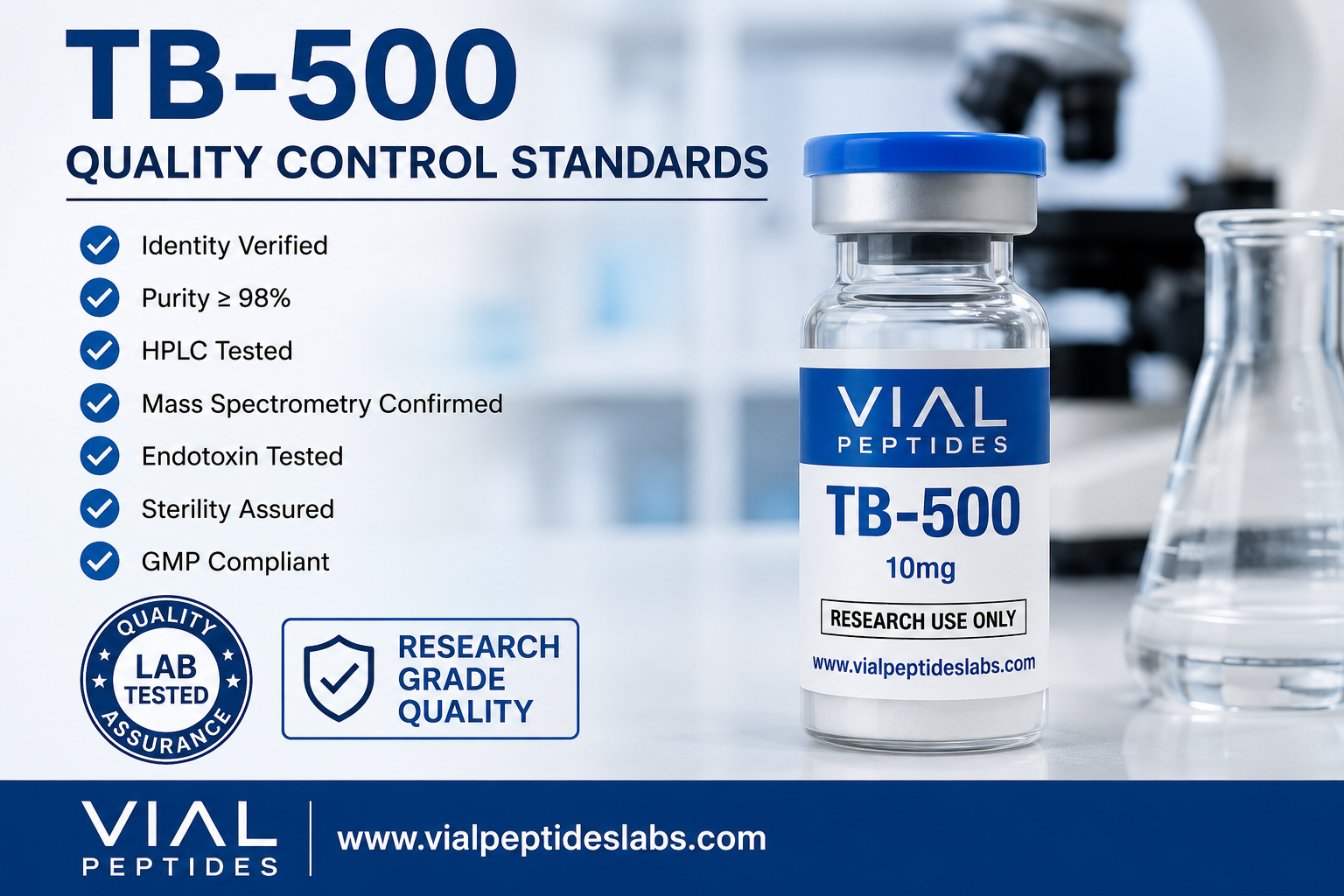
Laboratory handling procedures form part of a broader quality assurance program that also includes:
- Identity verification
- Purity testing
- HPLC analysis
- Mass spectrometry confirmation
- Batch consistency evaluations
- Stability monitoring
Together, these measures help ensure that TB-500 research materials meet established laboratory quality standards.
Common Handling Mistakes to Avoid
To maintain peptide integrity, laboratories should avoid:
- Leaving vials open unnecessarily
- Exposing peptides to excessive moisture
- Frequent temperature fluctuations
- Using non-sterile equipment
- Poor inventory documentation
- Improper storage conditions
- Mixing batches without proper records
Avoiding these practices helps protect peptide quality throughout the research process.
Conclusion
Following well-established TB-500 laboratory handling guidelines supports peptide stability, quality assurance, and reliable scientific research. Proper storage, contamination prevention, accurate documentation, temperature control, and standardized laboratory procedures all contribute to maintaining the integrity of research materials. By implementing consistent handling practices, laboratories can improve reproducibility and support high-quality peptide research from receipt through long-term storage.