
TB-500 peptide stability is an important factor in maintaining peptide integrity during laboratory research. Proper storage, handling, and preparation help preserve peptide structure, reduce degradation, and improve consistency across research applications. Whether stored in its lyophilized (freeze-dried) form or after reconstitution, following appropriate laboratory practices can significantly extend the usable lifespan of TB-500.
Why TB-500 Stability Matters
Peptides are sensitive biological molecules that can degrade when exposed to moisture, heat, oxygen, repeated freeze-thaw cycles, or contamination. Maintaining TB-500 stability helps researchers preserve purity, concentration, and reproducibility throughout experimental studies. Careful handling also minimizes unnecessary peptide loss and ensures more reliable laboratory results.
Stability of Lyophilized TB-500
Lyophilized TB-500 is the most stable form of the peptide because the freeze-drying process removes moisture that promotes chemical degradation. When stored correctly in sealed containers protected from moisture, light, and excessive heat, freeze-dried TB-500 can remain stable for extended periods.
For optimal laboratory storage:
- Store unopened vials at -20°C for long-term preservation.
- Keep the peptide protected from humidity and direct sunlight.
- Avoid frequent temperature fluctuations.
- Allow refrigerated or frozen vials to reach room temperature before opening to prevent condensation.
Proper storage conditions greatly reduce hydrolysis and oxidation, two common causes of peptide degradation.
Stability After Reconstitution
Once TB-500 has been reconstituted, its stability decreases because water allows natural degradation processes to occur more rapidly. Researchers typically store reconstituted solutions under refrigeration and prepare only the quantity needed for ongoing experiments.
Best laboratory practices include:
- Refrigerate reconstituted TB-500 at 2–8°C.
- Use sterile laboratory techniques during preparation.
- Divide the solution into small aliquots for single-use whenever possible.
- Avoid repeated freeze-thaw cycles, which may reduce peptide integrity over time.
Factors That Affect TB-500 Stability
Several environmental factors influence the long-term stability of TB-500:
- Temperature exposure
- Moisture contamination
- Light exposure
- Oxidation
- Improper pH during preparation
- Repeated freeze-thaw cycles
- Poor storage container quality
Controlling these variables helps maintain peptide quality throughout laboratory storage and handling.
Laboratory Storage Recommendations
Researchers commonly follow these storage guidelines:
- Keep lyophilized TB-500 in a dry, sealed vial.
- Store long-term inventory in laboratory freezers.
- Refrigerate working solutions between experiments.
- Label every vial with preparation date, concentration, and batch number.
- Inspect solutions for discoloration or visible particles before use.
- Maintain clean laboratory handling procedures to reduce contamination risk.
Quality Control and Stability Testing
High-quality TB-500 suppliers typically verify product stability through analytical testing methods such as:
- High-Performance Liquid Chromatography (HPLC)
- Mass Spectrometry (MS)
- Identity verification
- Purity analysis
- Batch-to-batch consistency testing
Routine quality control helps ensure that each production lot meets established research standards before distribution.
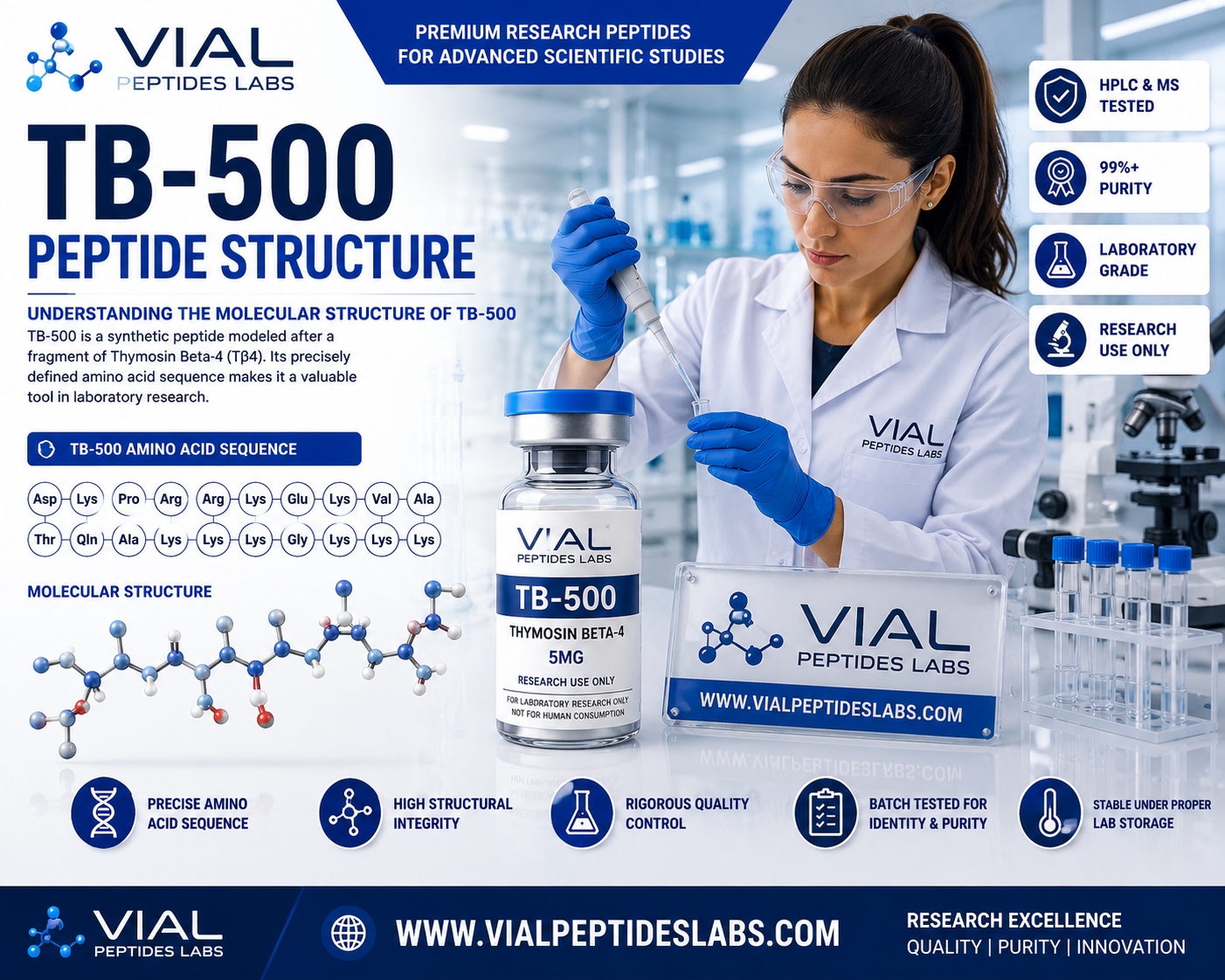
Choosing a Reliable Research Supplier
Selecting a trusted peptide supplier contributes to overall TB-500 stability. Researchers should look for manufacturers that provide:
- High-purity research peptides
- Third-party laboratory testing
- Certificates of Analysis (COAs)
- Proper cold-chain packaging
- Secure moisture-resistant containers
- Transparent manufacturing and quality assurance procedures
Conclusion
TB-500 peptide stability depends on proper storage, careful handling, and rigorous quality control. Lyophilized TB-500 offers excellent long-term stability when stored in dry, cold conditions, while reconstituted solutions require refrigeration and careful laboratory handling. Following established storage protocols helps preserve peptide integrity, improve experimental consistency, and support reliable research outcomes.