Peptide Chemistry Basics: Understanding the Science Behind Peptides
Peptide chemistry basics form the foundation of modern peptide science. Whether you are studying research peptides, molecular biology, or biotechnology, understanding peptide chemistry helps explain how peptides are created, how they function, and why they are important in scientific research.
Peptides are short chains of amino acids connected through peptide bonds. Although they are smaller than proteins, peptides play essential roles in living organisms. They participate in cell signaling, hormone regulation, immune responses, and countless biological processes.
Today, peptide chemistry has become one of the fastest-growing fields in biotechnology. Researchers use peptide chemistry to design research peptides, study biological pathways, investigate protein interactions, and develop innovative laboratory tools.
This guide explains the peptide chemistry basics every beginner should know.
What Is Peptide Chemistry?
Peptide chemistry is the branch of chemistry that focuses on the design, synthesis, structure, modification, purification, and analysis of peptides.
Unlike general organic chemistry, peptide chemistry specifically examines molecules composed of amino acids linked together through peptide bonds.
Scientists study peptide chemistry to understand:
- How peptides are formed
- Why peptide sequences matter
- How molecular structure affects biological activity
- How peptides interact with proteins
- How synthetic peptides are manufactured
- How peptide quality is verified
As peptide research expands, peptide chemistry continues to drive innovation across biotechnology, pharmaceutical research, molecular biology, analytical chemistry, and diagnostics.
Why Peptide Chemistry Basics Matter
Understanding peptide chemistry basics helps researchers produce high-quality research peptides and interpret experimental results more accurately.
A strong knowledge of peptide chemistry also supports:
- Better laboratory practices
- Improved peptide synthesis
- More accurate purity testing
- Enhanced peptide stability
- Reliable scientific research
- Consistent manufacturing standards
Without peptide chemistry, modern peptide research would not be possible.
Amino Acids: The Building Blocks of Peptides
Every peptide begins with amino acids.
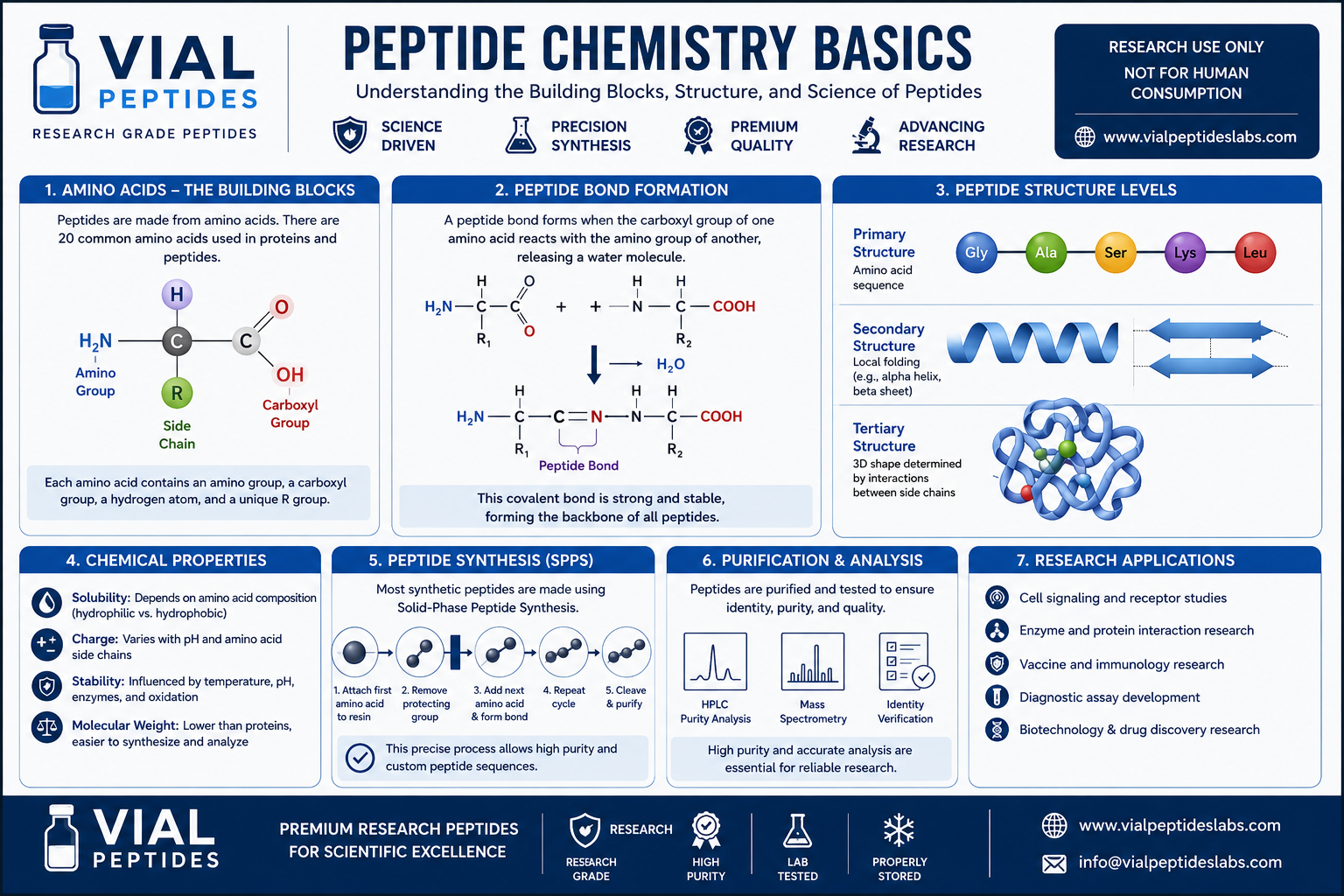
Amino acids are organic molecules that serve as the building blocks of peptides and proteins. There are twenty standard amino acids used by living organisms to build thousands of different peptides and proteins.
Each amino acid contains four important chemical components:
- An amino group (–NH₂)
- A carboxyl group (–COOH)
- A hydrogen atom
- A unique side chain called the R group
The R group determines the chemical properties of each amino acid.
Some amino acids are:
- Polar
- Non-polar
- Acidic
- Basic
- Aromatic
- Hydrophobic
- Hydrophilic
These differences determine how peptides fold, interact with other molecules, and perform biological functions.
Essential and Non-Essential Amino Acids
Although peptide chemistry focuses on molecular structure rather than nutrition, understanding amino acid classification is helpful.
Scientists generally classify amino acids into two broad categories:
Essential Amino Acids
These cannot be synthesized by the human body and must be obtained through dietary sources.
Examples include:
- Leucine
- Isoleucine
- Lysine
- Methionine
- Phenylalanine
- Threonine
- Tryptophan
- Valine
- Histidine
Non-Essential Amino Acids
These amino acids can be synthesized naturally within the body.
Examples include:
- Alanine
- Glycine
- Serine
- Proline
- Glutamate
- Aspartate
Both categories are equally important in peptide chemistry because any amino acid may appear within a peptide sequence.
How Amino Acids Form Peptides
One of the most important concepts in peptide chemistry basics is peptide bond formation.
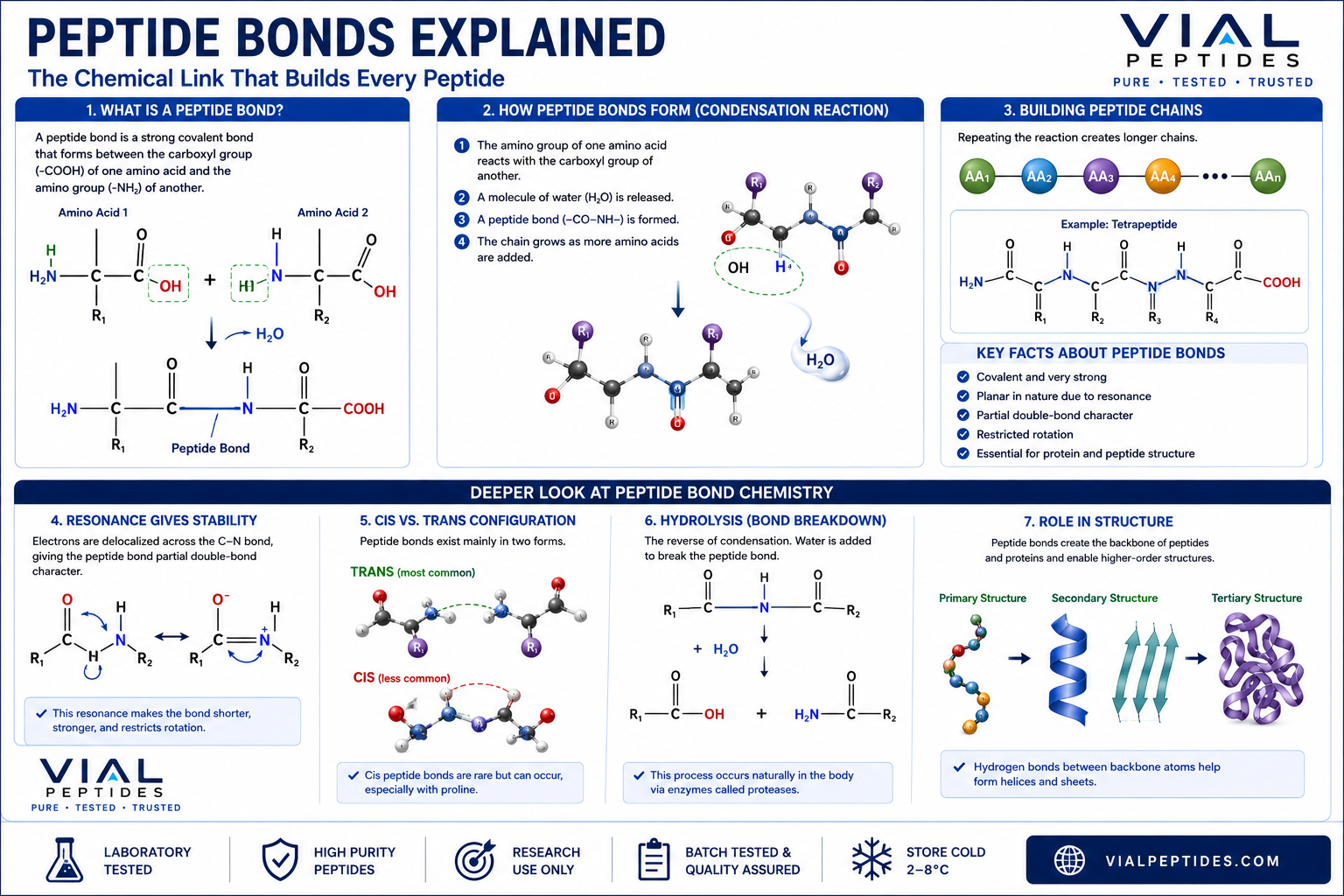
When the carboxyl group of one amino acid reacts with the amino group of another amino acid, a molecule of water is released.
This chemical reaction is called a condensation reaction (or dehydration synthesis).
The resulting covalent bond is known as a peptide bond.
By repeating this process many times, scientists and living cells create increasingly longer peptide chains.
A chain containing:
- Two amino acids is called a dipeptide.
- Three amino acids form a tripeptide.
- Several amino acids form an oligopeptide.
- Longer chains become polypeptides.
- Very long, folded chains are generally classified as proteins.
The order of amino acids in the chain, known as the primary structure, determines how the peptide behaves chemically and biologically.
The Importance of Amino Acid Sequence
Not all peptides are created equal.
Even changing a single amino acid within a peptide sequence can alter its chemical properties, stability, shape, and interactions with biological targets.
This is why peptide chemists place great emphasis on sequence accuracy during synthesis and quality control.
Modern analytical methods help verify that each synthesized peptide contains the intended amino acid sequence before it is used in research.
Why Peptide Chemistry Continues to Advance
Peptide chemistry basics remain at the heart of scientific innovation. Advances in automated synthesis, purification techniques, analytical instrumentation, and computational modeling have made it possible to produce increasingly complex peptide molecules with remarkable precision.
As researchers continue to explore new peptide sequences and molecular designs, peptide chemistry will remain a critical discipline in biotechnology, molecular biology, diagnostics, and laboratory research.
Peptide Chemistry Basics – Peptide Bonds, Structure, Properties, and Synthesis
Understanding Peptide Chemistry Basics requires more than knowing what amino acids are. It also involves learning how amino acids join together, how peptide structures influence their behavior, and how scientists manufacture research peptides for laboratory studies.
This section explores the core principles of peptide chemistry, including peptide bonds, molecular structure, chemical properties, peptide synthesis, and purification. These concepts are fundamental to biotechnology, molecular biology, and modern peptide research.
Peptide Bonds: The Foundation of Peptide Chemistry Basics
A peptide bond is the chemical link that joins two amino acids together. It is one of the most important concepts in Peptide Chemistry Basics because every peptide depends on these bonds to maintain its structure.
When the carboxyl group (-COOH) of one amino acid reacts with the amino group (-NH₂) of another, a molecule of water is released. This process is called dehydration synthesis or a condensation reaction.
The newly formed peptide bond creates a stable connection between the two amino acids.
Every peptide, regardless of its length, is built through this repeating process.
Characteristics of Peptide Bonds
Peptide bonds have several important chemical properties:
- They are strong covalent bonds.
- They provide stability to peptide chains.
- They have partial double-bond character, which limits rotation.
- They help determine the three-dimensional shape of peptides.
- They are essential for biological function.
Without peptide bonds, amino acids would remain individual molecules rather than forming biologically active peptides.
Understanding Peptide Structure
Another essential topic in Peptide Chemistry Basics is peptide structure. The arrangement of amino acids determines how a peptide behaves in laboratory environments and biological systems.
Scientists describe peptide structure using several levels of organization.
Primary Structure
The primary structure is the exact sequence of amino acids within a peptide chain.
For example:
Glycine → Alanine → Serine → Lysine
Even changing one amino acid can alter the peptide’s chemical characteristics and biological interactions.
Because of this, maintaining sequence accuracy is one of the highest priorities in peptide synthesis.
Secondary Structure
Some peptides naturally fold into organized shapes because of hydrogen bonding.
Common secondary structures include:
- Alpha helices
- Beta sheets
- Random coils
- Beta turns
These structural patterns influence stability and molecular interactions.
Tertiary Structure
Longer peptides may fold into complex three-dimensional structures.
The final shape depends on interactions such as:
- Hydrogen bonds
- Ionic interactions
- Hydrophobic interactions
- Disulfide bridges
- Van der Waals forces
The tertiary structure often determines how a peptide interacts with receptors, enzymes, or other molecules during laboratory investigations.
Chemical Properties of Peptides
One reason Peptide Chemistry Basics is such an important field is that peptides possess unique chemical characteristics.
These properties determine how peptides dissolve, fold, interact with molecules, and respond to different laboratory conditions.
Molecular Weight
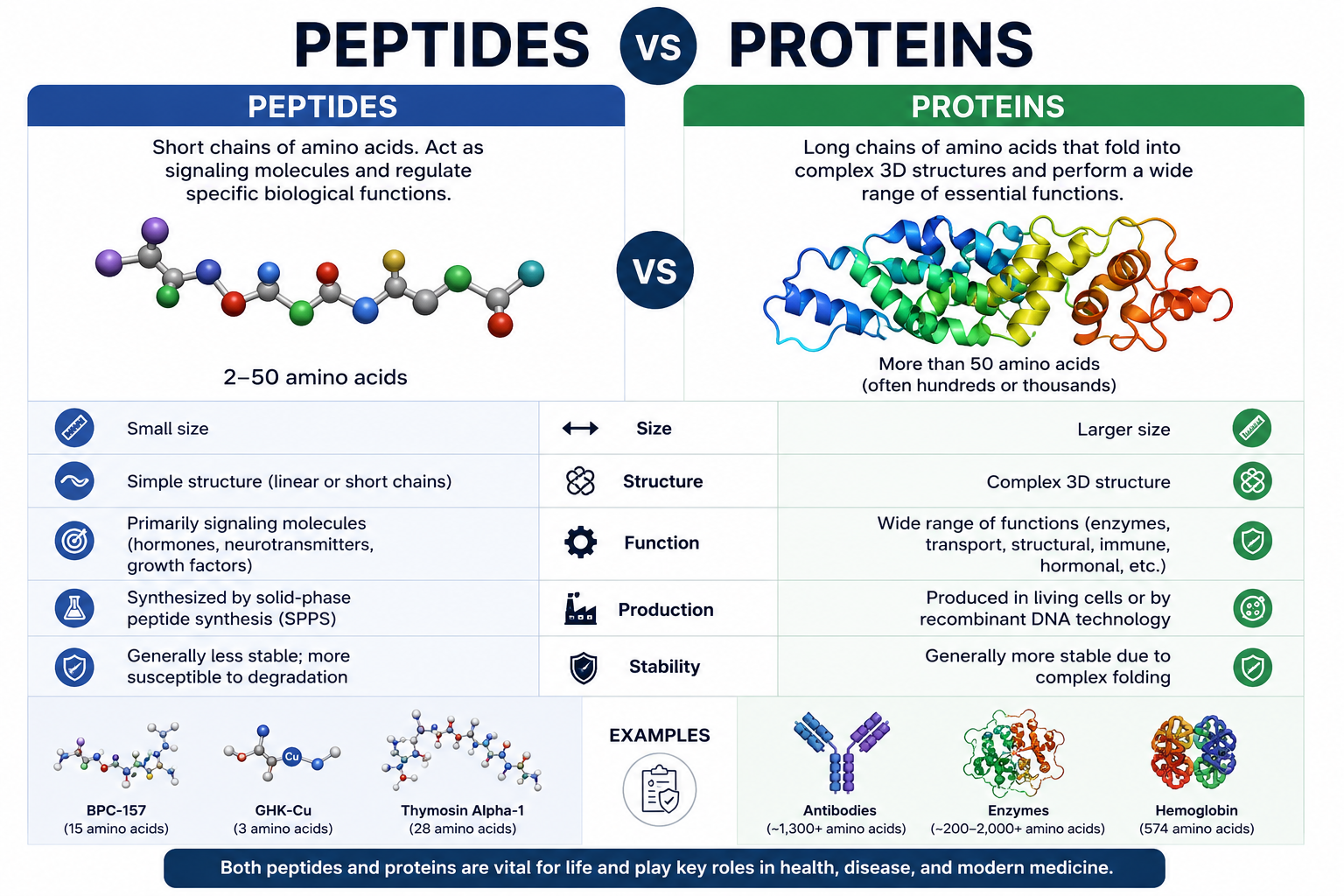
Compared with proteins, peptides generally have lower molecular weights.
Their relatively small size often makes them easier to synthesize, purify, and characterize.
Solubility
Peptide solubility depends on the amino acids present in the sequence.
Hydrophilic amino acids usually increase water solubility, while hydrophobic amino acids reduce it.
Laboratories often evaluate solubility before conducting analytical or biochemical studies.
Electrical Charge
Every peptide carries an electrical charge that varies according to pH.
This property influences:
- Solubility
- Molecular interactions
- Purification methods
- Chromatographic separation
- Laboratory analysis
Understanding peptide charge is essential for designing effective purification and analytical procedures.
Stability
Peptide stability depends on several factors, including:
- Temperature
- pH
- Moisture
- Oxidation
- Light exposure
- Amino acid composition
Researchers carefully control storage conditions to preserve peptide integrity throughout experimental studies.
Peptide Synthesis
One of the most exciting areas of Peptide Chemistry Basics is peptide synthesis.
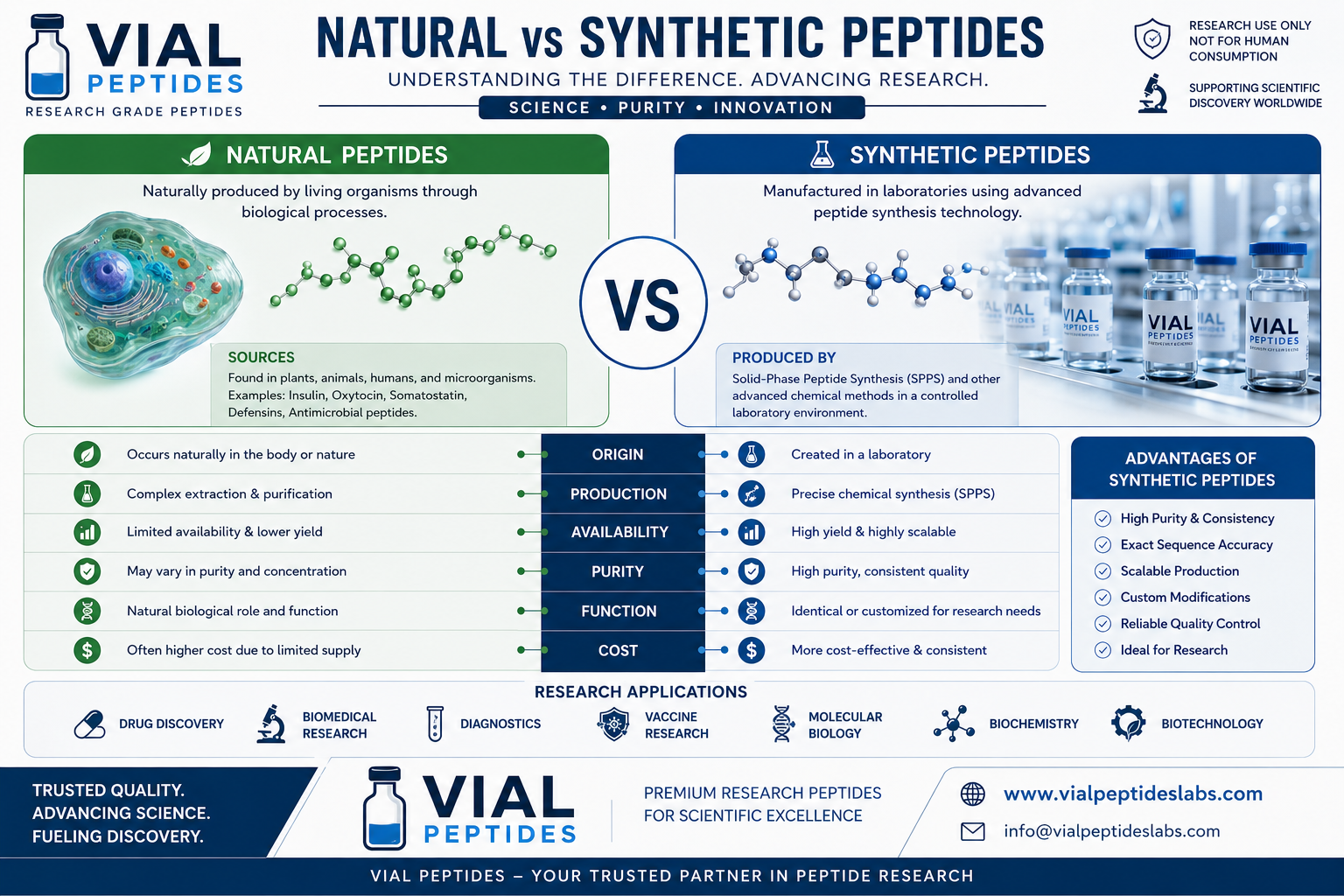
Instead of extracting peptides from living organisms, scientists often manufacture them using highly controlled laboratory techniques.
The most common method is Solid-Phase Peptide Synthesis (SPPS).
Solid-Phase Peptide Synthesis (SPPS)
SPPS revolutionized peptide manufacturing by allowing amino acids to be assembled one at a time on a solid resin.
The process generally includes:
- Attaching the first amino acid to a resin.
- Removing protective groups.
- Adding the next amino acid.
- Forming a new peptide bond.
- Repeating the cycle until the desired sequence is complete.
- Cleaving the peptide from the resin.
- Purifying the final product.
This approach enables researchers to produce peptides with high precision and reproducibility.
Advantages of Synthetic Peptide Production
Synthetic peptide manufacturing offers several important benefits.
These include:
- High sequence accuracy
- Excellent reproducibility
- Scalability
- Custom sequence design
- Chemical modifications
- High purity after purification
- Reliable laboratory performance
Because of these advantages, synthetic peptides have become indispensable in biotechnology and molecular research.
Peptide Purification
Following synthesis, peptides are not immediately ready for research.
They must first undergo purification to remove impurities, incomplete sequences, and synthesis by-products.
One of the most widely used purification techniques is High-Performance Liquid Chromatography (HPLC).
HPLC separates molecules according to their chemical properties, allowing scientists to isolate the desired peptide with high purity.
Purification improves:
- Experimental reliability
- Sequence consistency
- Analytical accuracy
- Research reproducibility
Peptide Characterization
Once purified, researchers verify peptide identity using advanced analytical methods.
Common techniques include:
- High-Performance Liquid Chromatography (HPLC)
- Mass Spectrometry (MS)
- Amino Acid Analysis
- Sequence Verification
- Nuclear Magnetic Resonance (NMR) spectroscopy
- Capillary Electrophoresis
These methods help confirm that the synthesized peptide matches the intended molecular design before it is used in laboratory experiments.
Why Peptide Chemistry Basics Matter in Research
Every stage of peptide research depends on sound chemical principles.
Understanding Peptide Chemistry Basics allows scientists to:
- Design accurate peptide sequences.
- Improve peptide stability.
- Optimize purification methods.
- Verify product quality.
- Develop reproducible laboratory protocols.
- Investigate molecular interactions with confidence.
As peptide science continues to advance, a strong foundation in peptide chemistry remains essential for researchers working in molecular biology, biotechnology, pharmaceutical discovery, diagnostics, and analytical chemistry.
Peptide Chemistry Basics – Applications, Quality Control, FAQs, and Conclusion
Understanding Peptide Chemistry Basics is essential for anyone studying peptide science. From designing new peptide sequences to verifying purity and stability, peptide chemistry supports nearly every stage of modern research. As biotechnology continues to evolve, peptide chemistry remains one of the fastest-growing areas of molecular science.
In this final section, you’ll learn how peptide chemistry is applied in research, why quality control matters, what the future holds for peptide science, and answers to common questions about Peptide Chemistry Basics.
Applications of Peptide Chemistry Basics
Knowledge of Peptide Chemistry Basics extends far beyond the laboratory bench. Researchers use peptide chemistry in biotechnology, analytical science, molecular biology, and biomedical research to better understand biological processes and develop innovative research tools.
Below are some of the most important applications.
Molecular Biology Research
Peptides help scientists investigate how cells communicate and respond to different biological signals. Because peptides interact with receptors, enzymes, and proteins, they are valuable tools for studying cellular pathways and molecular mechanisms.
Researchers apply Peptide Chemistry Basics to design peptide sequences that can help answer specific scientific questions in controlled laboratory settings.
Biotechnology
Biotechnology companies rely on peptide chemistry to create high-quality research materials with precise amino acid sequences and verified purity.
Common biotechnology applications include:
- Protein interaction studies
- Biomarker discovery
- Enzyme research
- Cell signaling analysis
- Antibody development
- Biosensor research
These applications demonstrate how Peptide Chemistry Basics contribute to scientific innovation across multiple disciplines.
Pharmaceutical Research
Many research programs investigate peptides because of their unique biological properties.
Using principles of Peptide Chemistry Basics, scientists can:
- Design custom peptide sequences.
- Study molecular interactions.
- Improve peptide stability.
- Evaluate peptide-receptor binding.
- Investigate structure-activity relationships.
These studies help expand scientific understanding and support early-stage research efforts.
Diagnostic Research
Synthetic peptides are widely used in laboratory diagnostic research because they can be manufactured with exceptional precision.
Applications include:
- Immunoassay development
- Antibody recognition studies
- Biomarker validation
- Protein detection methods
- Laboratory assay optimization
Their consistency makes synthetic peptides valuable reference materials for analytical investigations.
Quality Control in Peptide Chemistry
One of the most important aspects of Peptide Chemistry Basics is quality control.
Researchers depend on consistent, well-characterized peptides to produce reliable experimental results. Even small variations in sequence or purity can affect laboratory outcomes.
For this reason, peptide manufacturers implement rigorous quality assurance procedures before research peptides are released.
Common Quality Control Methods
High-quality research peptides are commonly evaluated using:
- High-Performance Liquid Chromatography (HPLC)
- Mass Spectrometry (MS)
- Amino Acid Analysis
- Sequence Verification
- Identity Testing
- Purity Assessment
These analytical methods help confirm that each peptide matches its intended molecular design.
Factors That Influence Peptide Stability
Another important topic in Peptide Chemistry Basics is stability.
Several environmental factors can affect peptide integrity during storage and handling.
These include:
- Temperature
- Moisture
- Oxygen exposure
- Light exposure
- pH conditions
- Repeated freeze-thaw cycles
Proper laboratory storage helps maintain peptide quality and supports reliable research results.
The Future of Peptide Chemistry
The future of Peptide Chemistry Basics is closely linked to advances in biotechnology and computational science.
Several emerging technologies are expected to shape peptide research over the coming years.
Artificial Intelligence
Artificial intelligence is helping researchers predict peptide structures, optimize amino acid sequences, and analyze complex molecular datasets more efficiently.
These tools accelerate research while improving the accuracy of peptide design.
Automated Peptide Synthesis
Modern peptide synthesizers continue to improve manufacturing speed, reproducibility, and sequence accuracy.
Automation reduces production errors and enables laboratories to produce increasingly complex peptide molecules.
Green Chemistry
Researchers are also developing more sustainable peptide synthesis methods.
Efforts include:
- Reducing solvent consumption
- Improving reaction efficiency
- Minimizing chemical waste
- Developing environmentally friendly manufacturing techniques
Green chemistry supports both scientific progress and environmental responsibility.
Personalized Research
Advances in genomics and proteomics are expanding opportunities to study peptide interactions in increasingly specific biological contexts.
As these fields continue to evolve, peptide chemistry will remain a fundamental component of life science research.
Frequently Asked Questions About Peptide Chemistry Basics
What is peptide chemistry?
Peptide chemistry is the branch of chemistry that studies the design, synthesis, purification, characterization, and analysis of peptides.
Why are peptide bonds important?
Peptide bonds connect amino acids to form peptide chains. Without peptide bonds, peptides and proteins could not exist.
What are peptides made of?
Peptides are composed of amino acids linked together through peptide bonds.
What is Solid-Phase Peptide Synthesis (SPPS)?
SPPS is the most widely used laboratory method for manufacturing synthetic peptides by adding amino acids one at a time to a solid support.
Why is peptide purity important?
High peptide purity improves experimental consistency and helps ensure that laboratory studies are based on accurately characterized materials.
How do researchers verify peptide quality?
Scientists commonly use analytical techniques such as HPLC, Mass Spectrometry, and sequence verification to confirm peptide identity and purity.
What affects peptide stability?
Temperature, moisture, light, oxidation, pH, and handling conditions can all influence peptide stability.
Why is peptide chemistry important in biotechnology?
Peptide chemistry enables researchers to produce customized peptides for molecular biology, biotechnology, diagnostics, and many other areas of scientific research.
Conclusion
Understanding Peptide Chemistry Basics is the first step toward appreciating the science behind research peptides. From amino acids and peptide bonds to synthesis, purification, characterization, and quality control, every aspect of peptide chemistry contributes to the development of reliable research materials and advances in modern biotechnology.
As new technologies continue to improve peptide synthesis and analytical methods, peptide chemistry will remain central to discoveries in molecular biology, diagnostics, and life science research. A strong understanding of Peptide Chemistry Basics allows researchers, students, and biotechnology professionals to better interpret scientific data, evaluate peptide quality, and explore the expanding possibilities of peptide science.
Key Takeaways
- Peptide Chemistry Basics explains how peptides are formed, synthesized, analyzed, and characterized.
- Amino acids are the building blocks of every peptide.
- Peptide bonds connect amino acids into stable chains.
- Solid-Phase Peptide Synthesis (SPPS) is the standard method for producing synthetic research peptides.
- Quality control techniques such as HPLC and Mass Spectrometry help verify peptide identity and purity.
- Peptide chemistry supports advancements in biotechnology, molecular biology, diagnostics, and laboratory research.
Internal Linking Suggestions for Vial Peptides
Strengthen topical authority by linking this article to:
- What Are Peptides?
- Amino Acids and Peptides
- Peptide Bonds Explained
- Peptide Structure Explained
- Natural vs Synthetic Peptides
- Peptides vs Proteins
- How Peptides Are Synthesized
- Understanding Peptide Purity
- HPLC Testing for Research Peptides
- Research Peptides Guide