
GMP Standards in Peptide Manufacturing
Good Manufacturing Practice (GMP) standards play a vital role in peptide manufacturing by establishing strict guidelines designed to ensure product quality, consistency, and reliability. As the peptide industry continues to expand, GMP standards have become an essential benchmark for manufacturers seeking to maintain high levels of quality assurance throughout the production process. These standards provide a structured framework that helps ensure peptides are produced, tested, packaged, and documented according to established quality requirements.
GMP standards in peptide manufacturing cover every stage of production, beginning with the sourcing of raw materials. Manufacturers must carefully evaluate suppliers and verify that incoming materials meet predefined specifications before they are approved for use. This process helps reduce variability and supports the production of high-quality peptide products.
A key component of GMP manufacturing is the implementation of standardized operating procedures. Every step of peptide synthesis, purification, testing, and packaging is governed by documented procedures that help ensure consistency between production batches. These procedures reduce the likelihood of errors and help maintain uniform product quality over time.
Facility design and environmental controls are also important aspects of GMP compliance. Manufacturing environments must be maintained under controlled conditions to minimize contamination risks and preserve product integrity. Equipment used during production must be properly calibrated, maintained, and validated to ensure accurate and reliable performance. Regular inspections and maintenance programs help support ongoing compliance with GMP requirements.
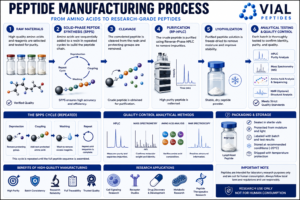
Quality control is one of the most significant elements of GMP peptide manufacturing. Comprehensive testing programs are implemented throughout production to verify product specifications and identify potential issues before products are released. Analytical techniques such as High-Performance Liquid Chromatography (HPLC) and Mass Spectrometry (MS) are commonly used to assess peptide purity, confirm molecular identity, and evaluate batch consistency. These testing procedures provide valuable data that supports product quality and reliability.
Documentation and traceability are fundamental principles of GMP standards. Detailed records are maintained for every batch produced, including manufacturing parameters, raw material information, testing results, and quality reviews. This documentation creates a complete production history that supports accountability and transparency. If quality concerns arise, manufacturers can quickly trace and investigate specific batches using documented records.
Employee training is another critical requirement within GMP systems. Personnel involved in peptide manufacturing must receive ongoing training to ensure they understand production procedures, quality standards, and compliance responsibilities. Well-trained employees contribute significantly to maintaining operational excellence and product quality.
Risk management is also integrated into GMP manufacturing practices. Manufacturers continuously assess production processes to identify potential risks and implement corrective actions when necessary. This proactive approach helps maintain quality standards and supports continuous improvement efforts.
As demand for premium peptide products continues to grow, GMP standards remain a cornerstone of modern peptide manufacturing. By emphasizing quality control, documentation, traceability, employee training, and validated production processes, GMP-compliant manufacturers can consistently deliver reliable peptide products. These standards help build trust within the scientific community while supporting product consistency, quality assurance, and long-term manufacturing excellence.