Therapeutic Peptide Research: Advancing Modern Peptide Science
Table of Contents
- What Is Therapeutic Peptide Research?
- History of Therapeutic Peptides
- How Therapeutic Peptides Are Studied
- Major Classes of Therapeutic Peptides
- Research Technologies
- Future of Therapeutic Peptide Research
- Frequently Asked Questions
- Conclusion
Therapeutic Peptide Research: Advancing Modern Peptide Science
Therapeutic Peptide Research is one of the fastest-growing fields in biotechnology and molecular science. Researchers around the world study peptides to better understand their structure, biological activity, molecular interactions, and potential applications in biomedical research. These investigations have expanded scientific knowledge and contributed to advances in peptide chemistry, analytical methods, and laboratory technologies.
Peptides are short chains of amino acids connected by peptide bonds. Although they are smaller than proteins, peptides participate in numerous biological processes, including cellular communication, hormone signaling, immune regulation, and enzyme interactions. Their specificity and versatility make them valuable molecules for scientific investigation.
Modern Therapeu Peptide Reseafocuses on understanding how peptides interact with biological systems at the molecular level. Researchers examine peptide stability, receptor binding, amino acid sequence, structural properties, and pharmacological characteristics using advanced laboratory techniques. These studies help expand scientific knowledge and support the development of innovative research tools.
As biotechnology continues to evolve, Therapeutic Pep Research remains a key area of investigation in universities, research institutes, and biotechnology laboratories worldwide.
Why Therapeutic Peptide Research Matters
The importance of Therapeutic Peptide Research extends across many scientific disciplines.
Researchers study peptides to better understand:
- Molecular signaling pathways
- Protein–peptide interactions
- Cellular communication
- Peptide chemistry
- Structure–activity relationships
- Biomolecular recognition
- Analytical methodologies
- Synthetic peptide design
Each discovery contributes to broader scientific understanding and supports future research innovations.
What Are Therapeutic Peptides?
Therapeutic peptides are peptide molecules that have been investigated for their biological activities in research settings. Some are naturally occurring molecules found in living organisms, while others are synthesized in laboratories to study specific molecular properties or biological pathways.
Researchers investigate therapeutic peptides to better understand:
- Amino acid sequence effects
- Receptor interactions
- Molecular stability
- Biological signaling
- Enzyme recognition
- Protein binding
- Cellular responses
Scientific research in this field continues to expand as new peptide sequences and analytical technologies become available.
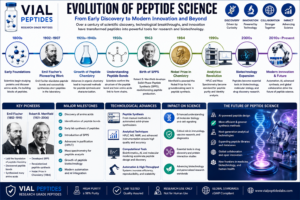
The Evolution of Therapeutic Peptide Research
The history of Therapeutic Peptide eflects decades of scientific progress.
Early peptide investigations focused on identifying naturally occurring peptide hormones and signaling molecules. As peptide chemistry advanced, researchers developed methods to synthesize peptides in laboratories and study them under controlled conditions.
Major milestones include:
- Discovery of biologically active peptides
- Advances in peptide chemistry
- Development of Solid-Phase Peptide Synthesis (SPPS)
- Improvements in purification technologies
- Growth of biotechnology
- Expansion of computational peptide design
These developments established the foundation for modern peptide research.
Natural and Synthetic Peptides in Research
Both natural and synthetic peptides play important roles in Therapeutic Peptide Research.
Natural Peptides
Natural peptides are produced by living organisms and participate in normal biological functions.
Researchers study them to understand their structure, function, and molecular interactions.
Synthetic Peptides
Synthetic peptides are manufactured using laboratory techniques such as Solid-Phase Peptide Synthesis (SPPS).
Advantages include:
- Precise amino acid sequences
- High reproducibility
- Defined purity
- Custom molecular design
- Controlled chemical modifications
These features make synthetic peptides valuable tools for laboratory investigations.
Why Peptides Are Valuable Research Molecules
Several characteristics make peptides particularly useful in scientific research.
These include:
- High molecular specificity
- Diverse biological functions
- Flexible chemical modification
- Reliable laboratory synthesis
- Compatibility with advanced analytical techniques
- Broad applications across biotechnology
These properties continue to drive interest in Therapeutic Peptide
Laboratory Technologies Supporting Therapeutic Peptide Research
Modern peptide laboratories use sophisticated analytical technologies to investigate peptide properties.
Common techniques include:
- High-Performance Liquid Chromatography (HPLC)
- Mass Spectrometry (MS)
- Nuclear Magnetic Resonance (NMR)
- Amino Acid Analysis
- Sequence Verification
- Capillary Electrophoresis
These methods help researchers evaluate peptide identity, purity, structure, and molecular characteristics.
Key Takeaways
- Therapy Peptide Research investigates peptide structure, biological activity, and molecular interactions in laboratory settings.
- Peptides are short amino acid chains with diverse biological functions.
- Both natural and synthetic peptides contribute to scientific research.
- Modern analytical technologies such as HPLC, MS, and NMR support high-quality peptide investigations.
- Continued advances in biotechnology and peptide chemistry are expanding opportunities for peptide research.
Therapeutic Peptide Research – Peptide Classes, Laboratory Methods, and Scientific Applications
Therapeutic Research has expanded rapidly over the past few decades as researchers continue to investigate how peptides interact with biological systems. Advances in peptide chemistry, biotechnology, and analytical science have enabled laboratories to study peptide structures, receptor interactions, and molecular behavior with remarkable precision.
This section explores the major classes of peptides investigated in Therapeutic Peptide, the laboratory methods used to study them, and the technologies that support modern peptide science.
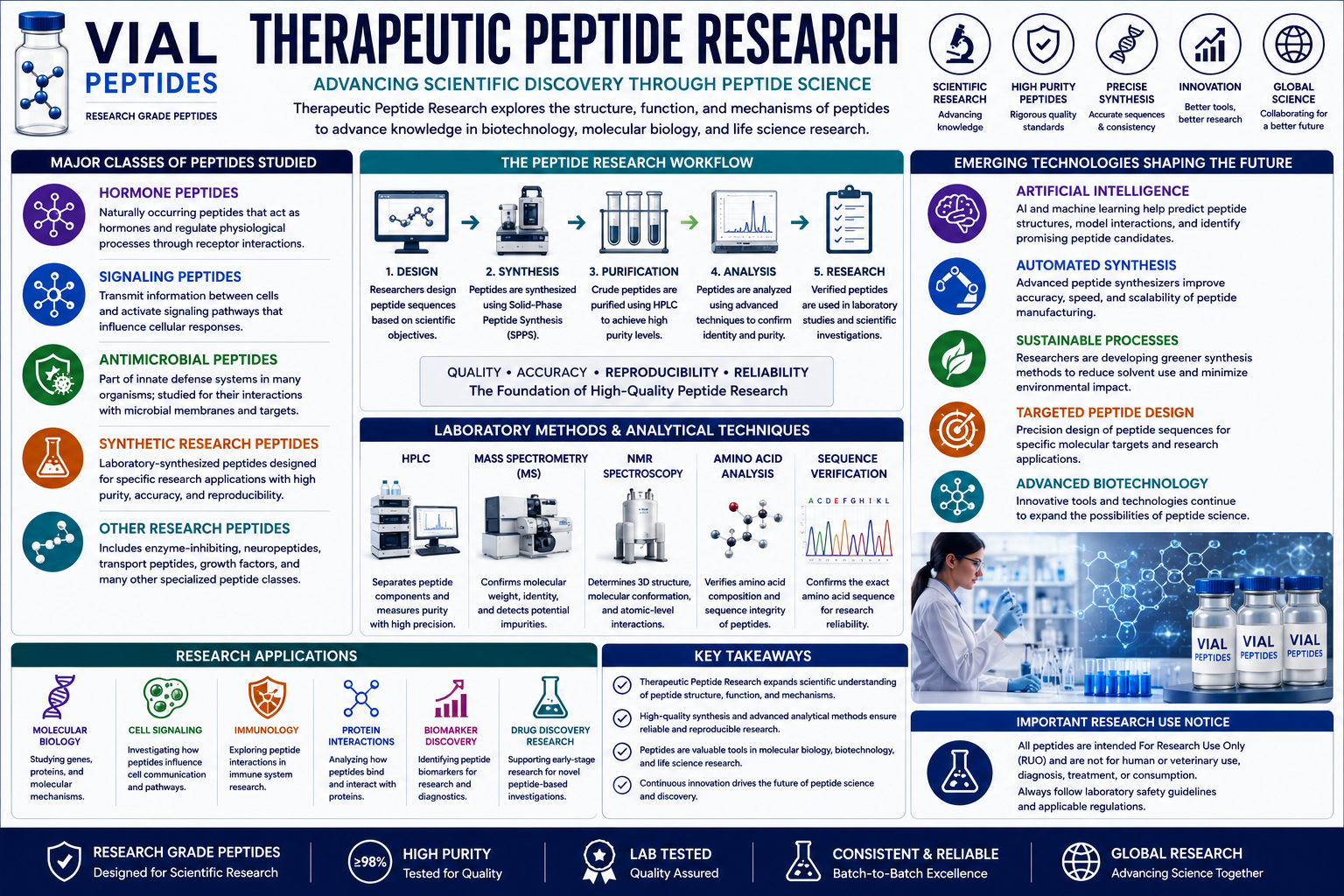
Major Classes Studied in Therapeutic Peptide Research
One of the most important aspects of Peptide Research is understanding that peptides are highly diverse. Scientists classify research peptides according to their biological functions, structural characteristics, and molecular targets.
Although every peptide is composed of amino acids linked by peptide bonds, each class possesses unique properties that make it suitable for different areas of scientific investigation.
Hormone Peptides
Hormone peptides are among the most extensively studied molecules in Therapeutic Peptides Research.
These naturally occurring peptides act as signaling molecules that help coordinate communication between tissues and organs.
Researchers investigate hormone peptides to better understand:
- Cellular signaling
- Receptor activation
- Endocrine communication
- Molecular regulation
- Biological feedback mechanisms
Studying these interactions improves scientific understanding of complex biological systems.
Signaling Peptides
Signaling peptides transmit information between cells.
Scientists use Therapeutic Peptide Research to examine how these molecules:
- Bind to receptors
- Trigger intracellular signaling pathways
- Coordinate cellular communication
- Regulate molecular responses
- Influence biological networks
These investigations contribute to broader knowledge in molecular biology and biochemistry.
Antimicrobial Peptides
Antimicrobial peptides are naturally occurring molecules produced by many living organisms.
Researchers study them to understand:
- Innate biological defense systems
- Peptide structure
- Membrane interactions
- Molecular recognition
- Evolution of peptide biology
These investigations continue to expand knowledge of naturally occurring peptide families.
Synthetic Research Peptides
Synthetic peptides are central to Therapeutic Peptide Research because they can be produced with exceptional precision.
Using Solid-Phase Peptide Synthesis (SPPS), scientists manufacture peptides with:
- Exact amino acid sequences
- High purity
- Excellent reproducibility
- Controlled modifications
- Reliable batch consistency
Synthetic peptides enable researchers to investigate specific molecular questions under standardized laboratory conditions.
Laboratory Methods Used in Therapeutic Peptide Research
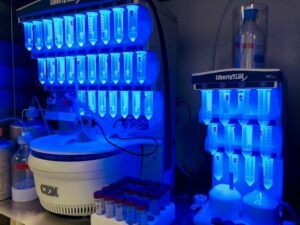
Modern Therapeutic Peptide Research depends on sophisticated laboratory technologies that help researchers evaluate peptide quality, structure, and molecular behavior.
Peptide Synthesis
Most research peptides are produced using Solid-Phase Peptide Synthesis (SPPS).
This technique allows scientists to assemble amino acids one at a time while maintaining precise control over the peptide sequence.
SPPS offers several advantages:
- High sequence accuracy
- Efficient production
- Excellent reproducibility
- Flexible peptide design
- Compatibility with chemical modifications
Because of these benefits, SPPS remains the standard method for producing synthetic research peptides.
High-Performance Liquid Chromatography (HPLC)
Following synthesis, researchers commonly use High-Performance Liquid Chromatography (HPLC) to purify peptides and evaluate their chemical composition.
HPLC helps scientists:
- Separate peptide molecules
- Measure purity
- Remove synthesis by-products
- Improve research consistency
- Support quality assurance
High-purity peptides contribute to more reliable laboratory investigations.
Mass Spectrometry (MS)
Mass Spectrometry is another essential analytical technique in Therapeutic Peptide Research.
Researchers use MS to:
- Confirm molecular weight
- Verify peptide identity
- Detect impurities
- Support sequence confirmation
- Characterize synthesized peptides
When combined with HPLC, Mass Spectrometry provides comprehensive analytical information.
Nuclear Magnetic Resonance (NMR)
Nuclear Magnetic Resonance (NMR) spectroscopy allows scientists to investigate peptide structure at the molecular level.
Researchers use NMR to study:
- Molecular conformation
- Three-dimensional structure
- Chemical environments
- Atomic interactions
- Structural stability
These data improve understanding of peptide behavior in laboratory settings.
Quality Control in Therapeutic Peptide Research
Quality control is essential for producing reliable research results.
Modern laboratories implement rigorous testing procedures to ensure that peptides meet defined quality standards before being used in scientific studies.
Common quality control procedures include:
- Sequence verification
- Purity assessment
- Identity confirmation
- Molecular weight analysis
- Amino acid composition analysis
- Stability evaluation
These procedures support experimental reproducibility and scientific accuracy.
Biotechnology and Therapeutic Peptide Research
Biotechnology has accelerated Therapeutic Peptide Research by providing improved synthesis technologies, analytical instruments, and computational tools.
Researchers now investigate peptides across numerous scientific disciplines, including:
- Molecular biology
- Structural biology
- Cell signaling
- Protein chemistry
- Immunology
- Analytical chemistry
- Biomarker discovery
- Synthetic biology
These applications demonstrate the growing importance of peptide research in modern science.
The Importance of Reproducibility
One of the primary goals of Therapeutic Peptide Research is generating reproducible scientific data.
Researchers improve reproducibility by:
- Using standardized synthesis methods
- Verifying peptide purity
- Confirming amino acid sequences
- Following validated laboratory protocols
- Documenting analytical results
- Applying consistent quality control measures
Reliable research depends on carefully characterized peptide materials and standardized experimental procedures.
Key Takeaways
- Therapeutic Peptide Research investigates diverse peptide classes, including hormone peptides, signaling peptides, antimicrobial peptides, and synthetic research peptides.
- Modern laboratories rely on SPPS, HPLC, MS, and NMR to synthesize and characterize peptides.
- Quality control plays a critical role in ensuring reproducible laboratory research.
- Biotechnology continues to expand the capabilities of peptide science through improved analytical methods and manufacturing technologies.
- Standardized laboratory practices help researchers generate reliable and consistent scientific data.
Therapeutic Peptide Research – Emerging Technologies, FAQs, and Conclusion
Therapeutic Peptide Research continues to evolve through advances in peptide chemistry, biotechnology, computational biology, and analytical science. Researchers are developing improved methods for designing, synthesizing, characterizing, and studying peptides, expanding scientific knowledge across numerous research disciplines.
This final section explores future trends in Therapeutic Peptide Research, answers frequently asked questions, and summarizes the importance of peptides in modern laboratory science.
Emerging Technologies in Therapeutic Peptide Research
The future of Therapeutic Peptide Research is being shaped by new technologies that improve research efficiency, molecular analysis, and peptide design.
Scientists continue to develop innovative tools that make peptide research faster, more accurate, and more reproducible.
Several important technologies are driving this progress.
Artificial Intelligence in Peptide Research
Artificial intelligence (AI) is becoming an increasingly valuable tool in Therapeutic Peptide Research.
Researchers use AI to:
- Predict peptide structures.
- Analyze amino acid sequences.
- Model peptide–protein interactions.
- Identify promising peptide candidates for further investigation.
- Process complex biological datasets.
AI-assisted research allows scientists to evaluate large amounts of information more efficiently and generate new research hypotheses.
Advanced Peptide Synthesis
Peptide synthesis technologies continue to improve.
Modern automated synthesizers provide:
- Greater sequence accuracy
- Faster production
- Improved reproducibility
- Reduced synthesis errors
- Better scalability
These improvements enable researchers to investigate increasingly complex peptide sequences.
High-Resolution Analytical Methods
Analytical technologies remain central to Therapeutic Peptide Research.
Researchers routinely use:
- High-Performance Liquid Chromatography (HPLC)
- Mass Spectrometry (MS)
- Nuclear Magnetic Resonance (NMR)
- Amino Acid Analysis
- Sequence Verification
- Capillary Electrophoresis
These methods provide detailed information about peptide identity, purity, molecular weight, and structural characteristics.
Sustainable Peptide Manufacturing
Environmental sustainability is becoming an important consideration in peptide research.
Scientists are exploring ways to:
- Reduce solvent consumption.
- Improve reaction efficiency.
- Minimize chemical waste.
- Develop greener synthesis techniques.
- Increase manufacturing sustainability.
These efforts support responsible scientific research while maintaining high-quality peptide production.
Research Applications of Therapeutic Peptides
The knowledge gained through Therapeutic Peptide Research supports a wide range of scientific fields.
Researchers use peptides in studies involving:
- Molecular biology
- Structural biology
- Cell signaling
- Immunology
- Protein interactions
- Biomarker discovery
- Analytical chemistry
- Biotechnology
- Synthetic biology
- Laboratory assay development
Each application contributes to a broader understanding of peptide structure and function.
Frequently Asked Questions About Therapeutic Peptide Research
What is Therapeutic Peptide Research?
Therapeutic Peptide Research is the scientific study of peptide molecules, their structures, molecular interactions, biological properties, and laboratory applications. Researchers investigate these molecules to better understand peptide biology and advance scientific knowledge.
What are therapeutic peptides?
Therapeutic peptides are peptide molecules that have been investigated for their biological activities in research settings. Some occur naturally, while others are synthesized for laboratory studies.
How are research peptides produced?
Most research peptides are manufactured using Solid-Phase Peptide Synthesis (SPPS), which allows scientists to assemble amino acids into precise sequences under controlled laboratory conditions.
Why is peptide purity important?
High peptide purity improves research reliability by reducing unwanted impurities that could influence experimental results. Laboratories commonly verify purity using techniques such as HPLC and Mass Spectrometry.
Which analytical techniques are used in Therapeutic Peptide Research?
Common methods include:
- High-Performance Liquid Chromatography (HPLC)
- Mass Spectrometry (MS)
- Nuclear Magnetic Resonance (NMR)
- Amino Acid Analysis
- Sequence Verification
These techniques help confirm peptide identity, purity, and structural integrity.
Why are synthetic peptides widely used?
Synthetic peptides provide researchers with precise amino acid sequences, excellent reproducibility, controlled modifications, and consistent quality, making them valuable tools for laboratory investigations.
How is artificial intelligence influencing peptide research?
AI assists researchers by predicting peptide structures, modeling molecular interactions, analyzing biological datasets, and supporting peptide design.
What is the future of Therapeutic Peptide Research?
The future of Therapeutic Peptide Research includes advances in automation, AI-assisted molecular design, greener synthesis methods, improved analytical technologies, and expanded scientific collaboration.
Conclusion
Therapeutic Peptide Research has become one of the most dynamic areas of modern biotechnology and molecular science. Through continued advances in peptide chemistry, synthesis technologies, computational biology, and analytical instrumentation, researchers are gaining deeper insights into peptide structure, molecular interactions, and biological function.
Modern laboratory techniques such as Solid-Phase Peptide Synthesis (SPPS), High-Performance Liquid Chromatography (HPLC), Mass Spectrometry (MS), and Nuclear Magnetic Resonance (NMR) have transformed the study of peptides by enabling precise synthesis, characterization, and quality assessment.
As scientific knowledge continues to expand, Therapeutic Peptide Research will remain an essential field supporting discoveries in molecular biology, biotechnology, analytical chemistry, and life science research. By understanding peptide chemistry, maintaining rigorous quality standards, and adopting innovative technologies, researchers can continue advancing peptide science while improving the reliability and reproducibility of laboratory investigations.
Key Takeaways
- Therapeutic Peptide Research focuses on understanding peptide structure, biological activity, and molecular interactions through laboratory investigation.
- Researchers study both naturally occurring and synthetic peptides using advanced analytical technologies.
- Modern peptide research depends on SPPS, HPLC, MS, NMR, and other quality-control techniques.
- Artificial intelligence, automation, and sustainable synthesis are shaping the future of peptide science.
- Continued advances in biotechnology and molecular biology will further expand the role of peptides in scientific research.
Internal Linking Suggestions for Vial Peptides
To strengthen topical authority and improve user navigation, link this article to:
- What Are Peptides?
- Peptide Chemistry Basics
- Natural vs Synthetic Peptides
- Common Types of Peptides
- Peptide Structure Explained
- Peptide Bonds Explained
- Peptide Nomenclature
- History of Peptide Research
- Evolution of Peptide Science
- How Peptides Are Synthesized
- Understanding Peptide Purity
- HPLC Testing for Research Peptides
- Research Peptides Guide
- Individual research peptide pages available on your website
Image SEO
Featured Image Alt Text
Therapeutic Peptide Research infographic showing peptide synthesis, laboratory analysis, biotechnology research, and peptide characterization.
Additional Image Alt Text Ideas
- Therapeutic peptide research laboratory workflow
- Peptide synthesis and analytical testing infographic
- Modern biotechnology and peptide research illustration
- Research peptide qu