Research Peptides BPC-157 | Scientific Research Peptide Guide
Research Peptides BPC-157
BPC-157 is one of the most widely discussed research peptides in modern peptide science. Manufactured using advanced peptide synthesis techniques, BPC-157 is supplied exclusively for laboratory and scientific research. Researchers select high-quality BPC-157 based on analytical purity, manufacturing consistency, quality control standards, and complete batch documentation.
At VIAL PEPTIDES, every batch of BPC-157 is produced to support reliable laboratory research through comprehensive analytical testing and transparent quality assurance.
What Are Research Peptides?
Research peptides are short chains of amino acids manufactured for scientific investigation. Their defined molecular structures make them valuable for laboratory studies involving peptide chemistry, analytical testing, and molecular biology.
Research peptides are produced under carefully controlled manufacturing conditions and undergo multiple quality assessments before being released for laboratory use.
Understanding BPC-157
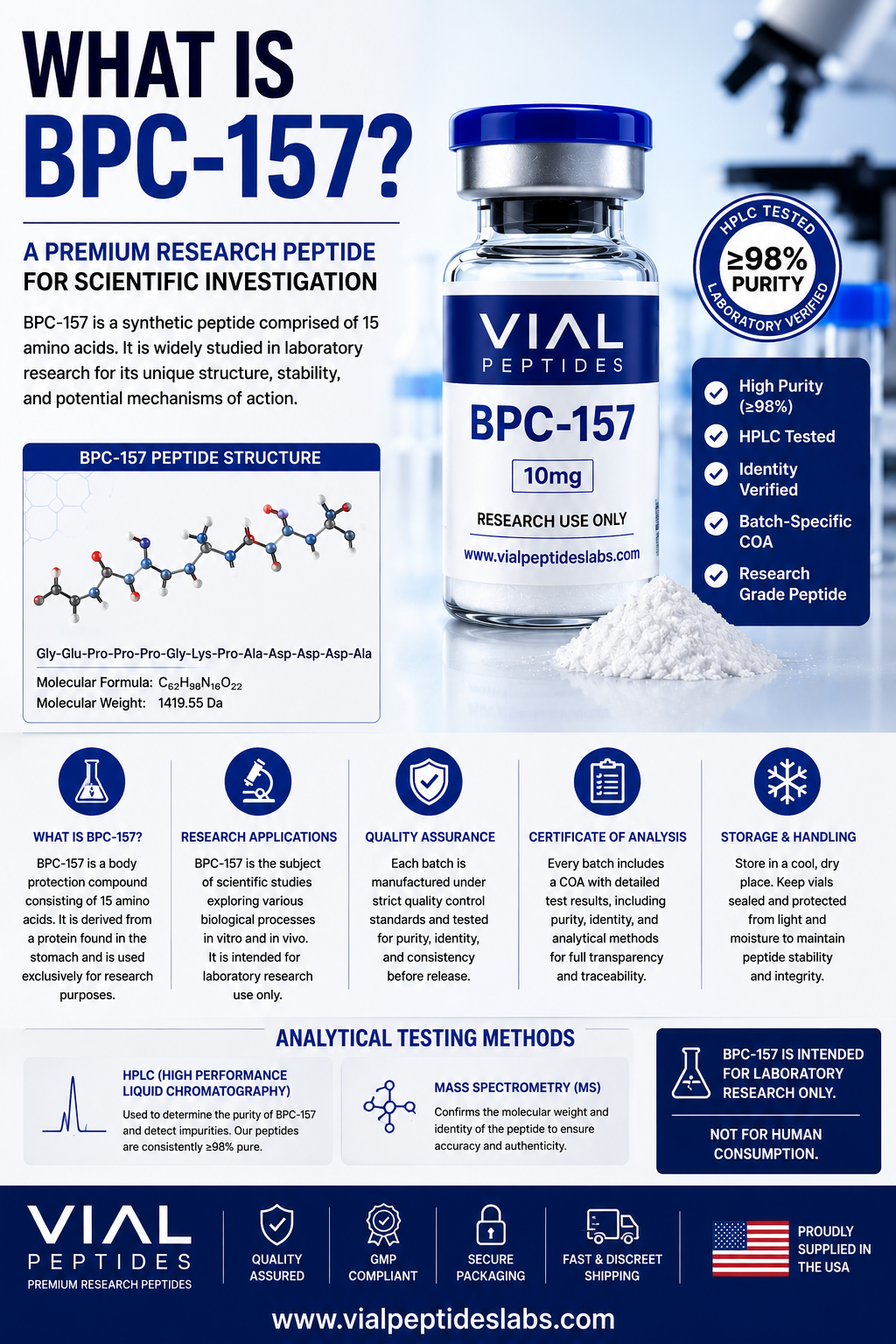
BPC-157 is a synthetic peptide manufactured through precision peptide synthesis. It is typically supplied in a lyophilized (freeze-dried) form to support stability during transportation and storage.
Researchers commonly evaluate BPC-157 based on:
- Analytical purity
- Identity verification
- Manufacturing quality
- Batch consistency
- Stability
- Laboratory documentation
These quality characteristics help support reproducible scientific investigations.
Manufacturing Research Peptides
Producing high-quality research peptides requires strict manufacturing controls.
The manufacturing process generally includes:
- Precision peptide synthesis
- Advanced purification procedures
- Identity confirmation
- HPLC purity analysis
- Batch consistency testing
- Quality assurance review
- Secure laboratory packaging
Each stage contributes to the overall quality and consistency of the finished peptide.
Analytical Testing
Comprehensive analytical testing is essential for verifying research peptide quality.
Common laboratory methods include:
High-Performance Liquid Chromatography (HPLC)
HPLC evaluates analytical purity by separating the desired peptide from synthesis-related impurities.
Mass Spectrometry
Mass spectrometry confirms molecular weight and verifies peptide identity.
Additional Quality Control
Quality assurance programs may also include:
- Visual inspection
- Stability assessments
- Documentation review
- Batch verification
Together, these procedures help confirm product quality before release.
Certificate of Analysis (COA)
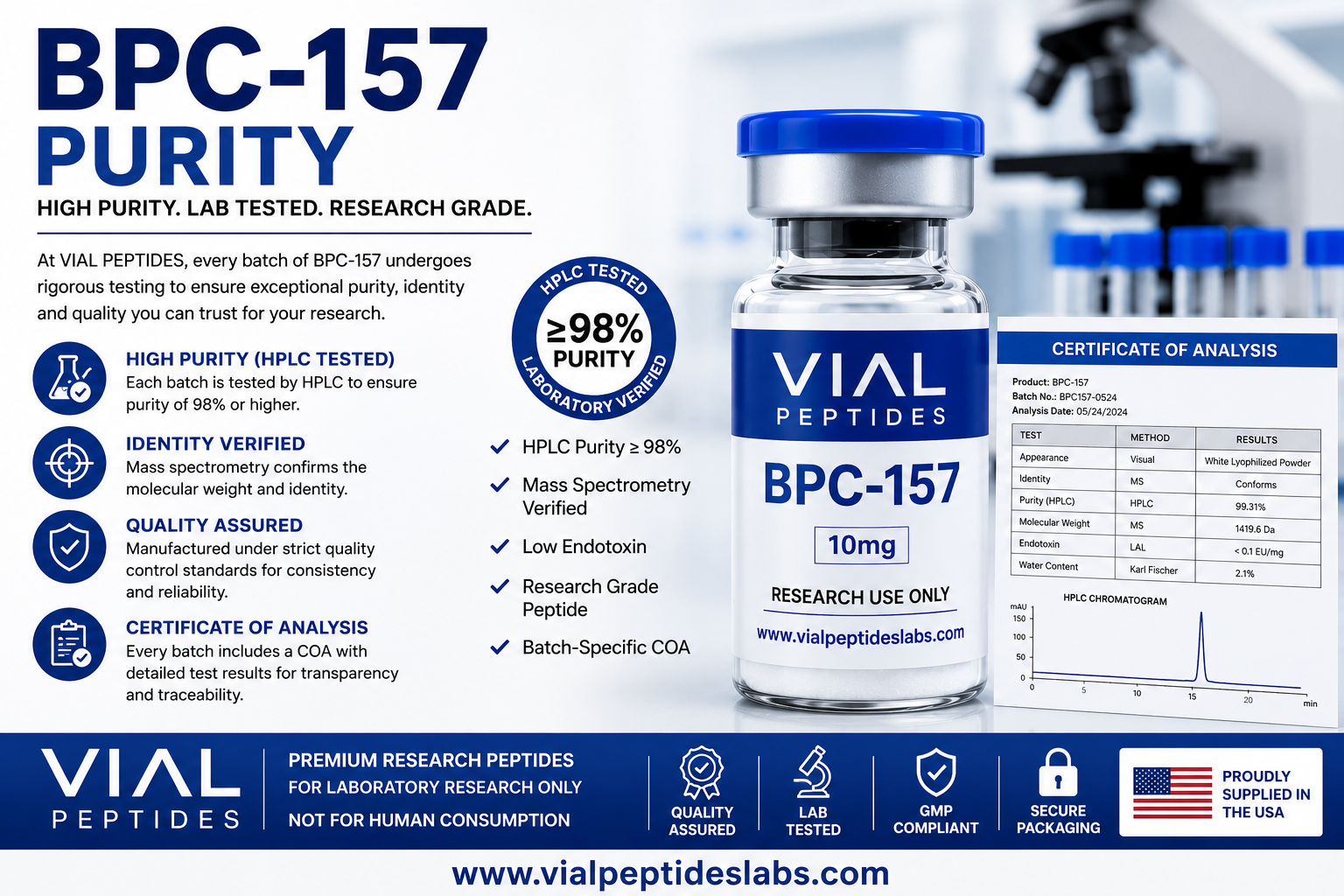
Each production batch should include a Certificate of Analysis that documents laboratory testing.
A COA typically provides:
- Product identification
- Batch number
- Purity results
- Identity confirmation
- Analytical testing methods
- Storage recommendations
Batch-specific documentation improves traceability and supports laboratory record keeping.
Laboratory Storage and Handling
Maintaining proper storage conditions helps preserve peptide integrity.
Recommended laboratory practices include:
- Store according to the manufacturer’s recommendations.
- Keep vials tightly sealed.
- Protect from moisture.
- Avoid prolonged exposure to direct light.
- Minimize unnecessary temperature fluctuations.
- Follow standardized laboratory handling procedures.
Proper storage supports long-term stability and analytical consistency.
Choosing High-Quality Research Peptides
Researchers often select suppliers that provide:
- High-purity peptides
- Batch-specific Certificates of Analysis
- HPLC purity testing
- Identity verification
- Transparent manufacturing processes
- Comprehensive quality control
- Secure laboratory packaging
These characteristics help support reproducible scientific research.
Why Choose VIAL PEPTIDES?
At VIAL PEPTIDES, we are committed to providing premium research peptides manufactured to rigorous laboratory standards.
Our commitment includes:
- High-purity research peptides
- HPLC-tested batches
- Identity verification
- Batch-specific Certificates of Analysis
- Strict quality control procedures
- Secure laboratory packaging
- Consistent manufacturing standards
- Professional customer support
Every production batch is carefully evaluated before release to help support reliable laboratory research.
Conclusion
Research peptides BPC-157 continue to play an important role in peptide science because of their defined molecular structure and well-documented manufacturing standards. Selecting high-quality research materials supported by analytical testing, comprehensive quality control, and batch-specific documentation helps laboratories maintain consistency, traceability, and confidence in their research programs.
.
Frequently Asked Questions
What are research peptides?
Research peptides are amino acid chains manufactured for laboratory and scientific investigations. They are used to study peptide chemistry, molecular interactions, and other research applications.
Why is purity important for BPC-157?
Analytical purity helps researchers evaluate the quality and consistency of a peptide batch. Purity is commonly assessed using techniques such as High-Performance Liquid Chromatography (HPLC).
What is included in a Certificate of Analysis?
A Certificate of Analysis generally contains product identification, batch information, purity results, identity confirmation, analytical methods, and storage recommendations for the specific batch tested.
Suggested Internal Links
- What Is BPC-157?
- BPC-157 Peptide
- Buy BPC-157
- BPC-157 Peptide for Sale
- BPC-157 Purity
- BPC-157 Manufacturing Process
- BPC-157 Quality Control Standards
- BPC-157 Certificate of Analysis (COA) Guide
- BPC-157 Laboratory Handling Guidelines
- BPC-157 Research References