
Kisspeptin Stability
Understanding Kisspeptin Stability for Reliable Research
Kisspeptin stability is a critical factor in maintaining the quality, purity, and consistency of this widely studied research peptide. Proper manufacturing, storage, handling, and transportation all contribute to preserving its structural integrity throughout its lifecycle. By following established laboratory best practices, researchers can help ensure that Kisspeptin remains suitable for reproducible scientific investigations.
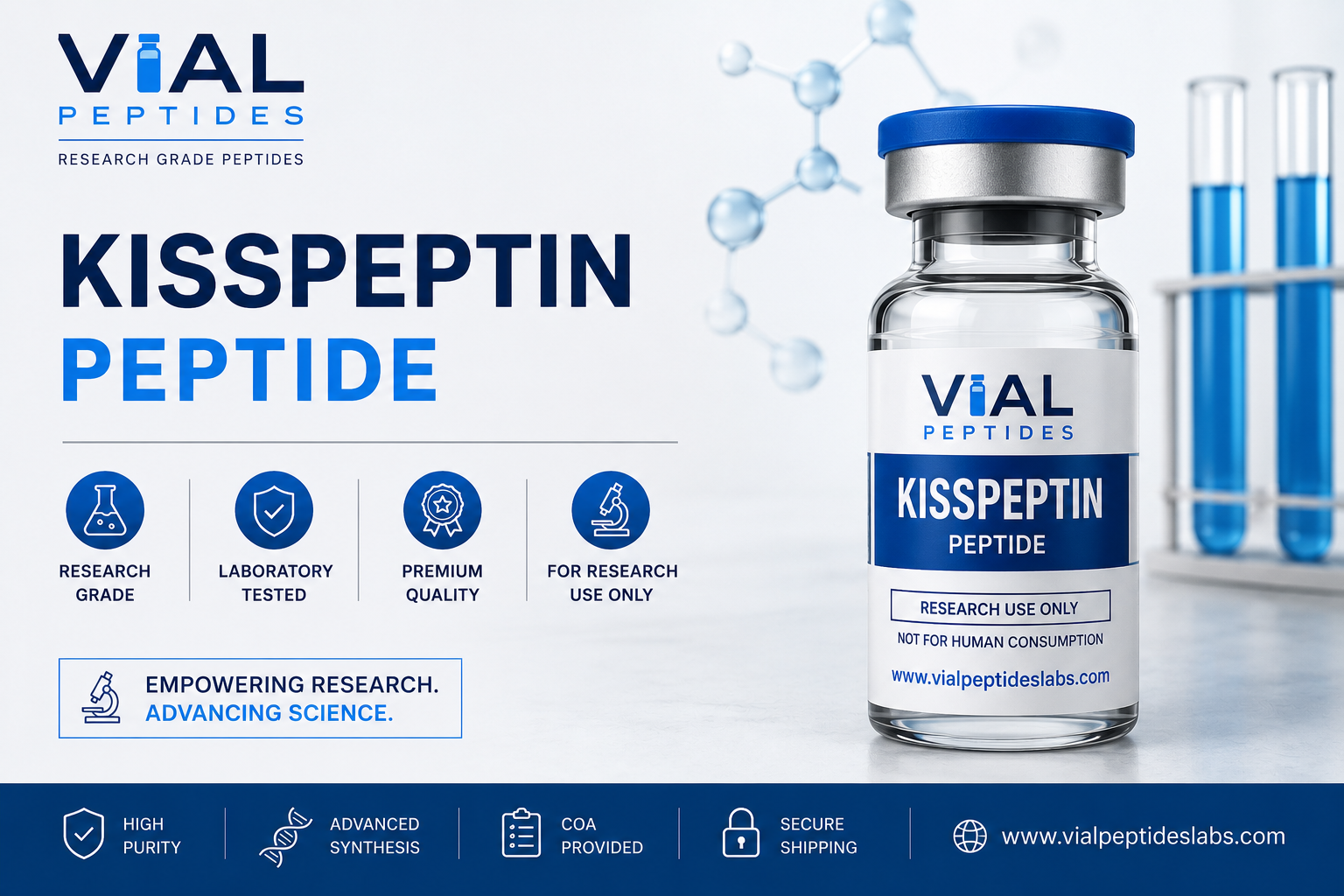
At VIAL PEPTIDES LABS, Kisspeptin is manufactured under stringent quality standards and undergoes comprehensive analytical testing to support high-quality research applications.
What Affects Kisspeptin Stability?
Several environmental factors can influence the stability of synthetic peptides, including Kisspeptin. Understanding these variables helps laboratories maintain sample quality from receipt through experimental use.
Common factors include:
- Storage temperature
- Moisture exposure
- Oxygen exposure
- Light exposure
- Solution pH after reconstitution
- Repeated freeze-thaw cycles
- Improper handling procedures
Controlling these conditions helps reduce degradation and supports consistent research performance.
Stability of Lyophilized Kisspeptin
Lyophilized (freeze-dried) Kisspeptin is generally more stable than its liquid counterpart. When stored in a sealed vial at -20°C or below, the dry peptide maintains its integrity significantly longer than reconstituted solutions.
Researchers should store lyophilized material in a dry, dark environment to minimize exposure to humidity and temperature fluctuations before use.
Stability After Reconstitution
Following reconstitution with an appropriate laboratory-grade solvent, Kisspeptin becomes more susceptible to environmental degradation. For short-term laboratory use, reconstituted solutions are commonly stored under refrigeration at 2–8°C.
When longer storage is necessary, laboratories often prepare sterile aliquots and freeze them at -20°C or lower. This practice reduces unnecessary handling and helps preserve sample quality over time.
Preventing Peptide Degradation
Maintaining Kisspeptin stability involves careful laboratory handling throughout every stage of research.
Recommended practices include:
- Store unopened vials in recommended cold conditions.
- Keep containers tightly sealed.
- Avoid prolonged exposure to room temperature.
- Protect samples from direct sunlight.
- Use sterile laboratory equipment during reconstitution.
- Prepare aliquots to reduce repeated freeze-thaw cycles.
- Label samples clearly with preparation and storage information.
These procedures help preserve peptide integrity and improve experimental reproducibility.
Manufacturing Quality Supports Stability
Stability begins during peptide production. High-quality manufacturing processes help minimize impurities that may affect long-term storage performance.
At VIAL PEPTIDES LABS, every Kisspeptin batch undergoes rigorous quality control procedures, including analytical testing for identity, purity, and consistency before release for research use. Combined with proper laboratory storage, these quality standards help maintain reliable peptide performance.
Transportation and Cold-Chain Handling
Temperature fluctuations during transportation may affect peptide quality. Maintaining appropriate cold-chain conditions during shipping helps reduce unnecessary exposure to elevated temperatures.
Researchers should inspect shipments immediately upon arrival and transfer products to appropriate storage conditions without delay.
Why Stability Matters
Consistent peptide stability contributes to reproducible laboratory results. Variations caused by improper storage or handling can influence experimental consistency and reduce confidence in research findings.
By combining high-quality manufacturing with recommended laboratory storage practices, researchers can maximize the integrity of Kisspeptin throughout its intended research use.
Frequently Asked Questions
What is Kisspeptin stability?
Kisspeptin stability refers to the peptide’s ability to maintain its structural integrity, purity, and quality during storage, handling, transportation, and laboratory use.
Is lyophilized Kisspeptin more stable?
Yes. Lyophilized Kisspeptin is generally more stable than reconstituted solutions when stored under recommended laboratory conditions.
How can researchers improve Kisspeptin stability?
Proper cold storage, protection from moisture and light, sterile handling, airtight containers, and minimizing freeze-thaw cycles all help preserve peptide stability.
Why are freeze-thaw cycles discouraged?
Repeated freezing and thawing may gradually contribute to peptide degradation. Preparing small aliquots minimizes unnecessary temperature changes and helps maintain sample integrity.
Conclusion
Proper handling and storage are essential for maintaining Kisspeptin stability throughout laboratory research. By protecting the peptide from moisture, heat, light, and repeated freeze-thaw cycles, researchers can help preserve its quality and support reliable, reproducible scientific investigations. Choosing a trusted supplier such as VIAL PEPTIDES LABS, combined with adherence to recommended laboratory practices, provides a strong foundation for consistent research outcomes.