BPC-157 Dosage for Research: Understanding Laboratory Research Considerations
BPC-157 Dosage for Research
The phrase “BPC-157 dosage for research” is commonly searched by researchers looking for information about experimental study design. It is important to understand that there is no universally accepted or standardized dosage for BPC-157. Appropriate experimental parameters vary depending on the research model, study objectives, methodology, and applicable institutional or regulatory requirements.
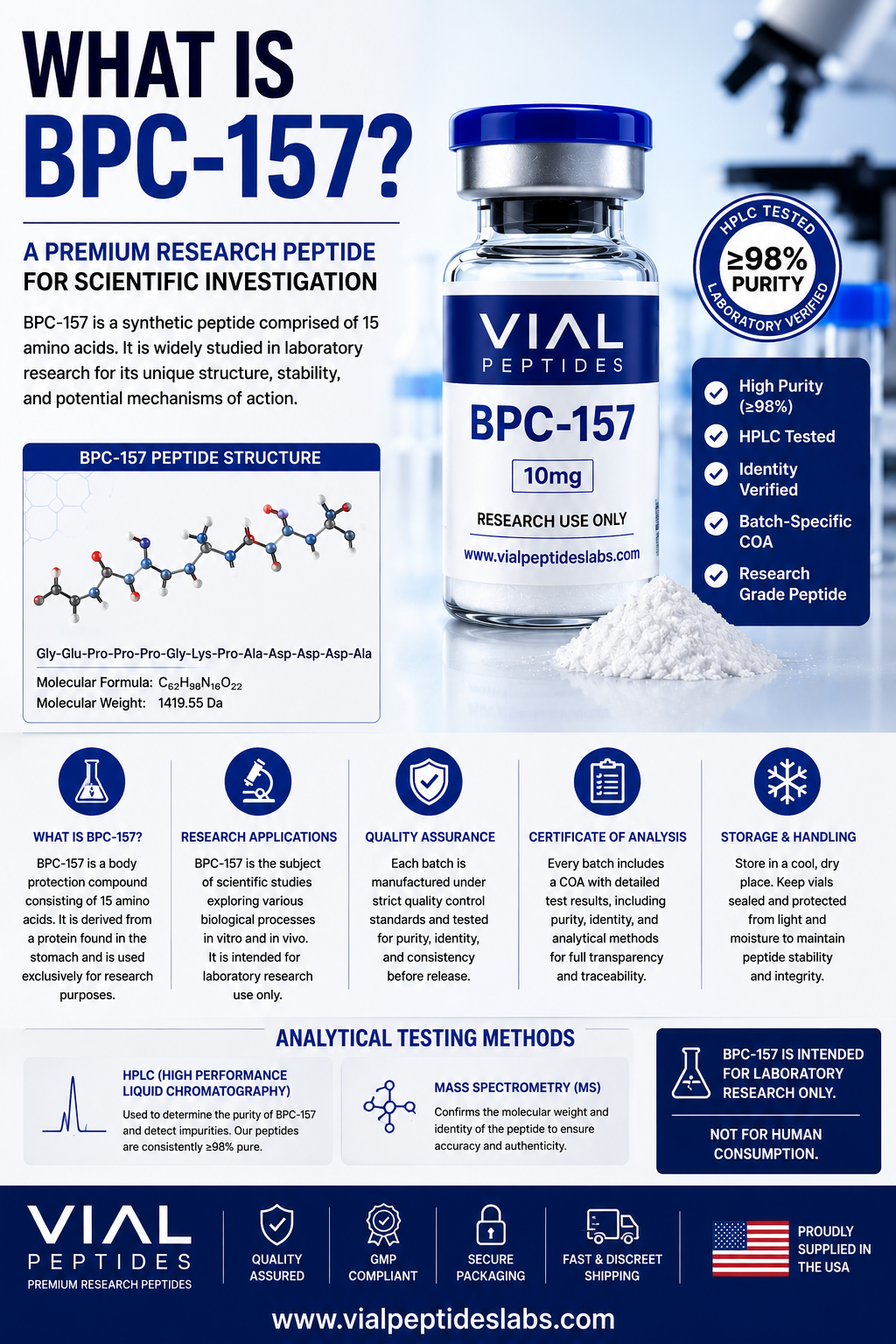
BPC-157 supplied by VIAL PEPTIDES is intended exclusively for laboratory research and is not approved for human consumption, therapeutic use, or diagnostic use.
Is There a Standard Research Dosage?
No. There is no single research dosage that applies to every laboratory study.
Experimental protocols differ based on factors such as:
- Research objectives
- Experimental model
- Study duration
- Laboratory methodology
- Institutional protocols
- Ethical and regulatory requirements
Researchers should establish study parameters appropriate for their specific research design.
Why Experimental Conditions Vary
Scientific studies are designed to answer different research questions. As a result, experimental conditions—including the amount of material used—may vary considerably between studies.
Researchers typically document:
- Study objectives
- Experimental methods
- Laboratory procedures
- Analytical measurements
- Quality control practices
- Data collection methods
Clear documentation supports reproducibility and transparency.
The Importance of High-Quality Research Materials
Regardless of study design, researchers benefit from well-characterized peptide materials.
Important quality considerations include:
- High analytical purity
- Identity verification
- Batch consistency
- Certificate of Analysis (COA)
- HPLC purity testing
- Mass spectrometry confirmation
- Secure laboratory packaging
Reliable research materials help improve consistency across laboratory investigations.
Laboratory Documentation
Maintaining accurate records is an essential part of responsible scientific research.
Documentation commonly includes:
- Batch numbers
- Certificate of Analysis
- Storage records
- Preparation logs
- Quality control data
- Laboratory observations
Well-maintained records support traceability and reproducibility.
Storage and Handling
Proper handling helps preserve peptide quality throughout a research project.
Recommended practices include:
- Store according to the manufacturer’s recommendations.
- Keep vials tightly sealed.
- Protect from moisture and excessive light.
- Minimize unnecessary temperature fluctuations.
- Use clean laboratory equipment.
- Follow established laboratory procedures.
Proper storage helps maintain product integrity.
Choosing a Trusted Research Peptide Supplier
Researchers should consider suppliers that provide:
- Batch-specific Certificates of Analysis
- HPLC purity testing
- Identity verification
- Transparent manufacturing practices
- Comprehensive quality control
- Secure laboratory packaging
- Reliable documentation
These factors help support high-quality scientific research.
Why Researchers Choose VIAL PEPTIDES
VIAL PEPTIDES is committed to supplying premium research peptides manufactured with strict quality standards.
Our commitment includes:
- High-purity research peptides
- Comprehensive quality control
- Batch-specific Certificates of Analysis
- HPLC purity testing
- Identity verification
- Consistent manufacturing standards
- Secure packaging
- Professional customer support
Every batch is produced to support laboratory research with dependable quality documentation.
Conclusion
Searches for “BPC-157 dosage for research” reflect interest in experimental design, but there is no standardized research dosage applicable to all studies. Research protocols should be developed according to the objectives, methods, and oversight requirements of each investigation. Selecting high-quality, well-documented research materials and following established laboratory procedures can help support consistent and reproducible scientific work.
Suggested Internal Links
- What Is BPC-157?
- BPC-157 Peptide
- BPC-157 for Sale
- Buy BPC-157
- BPC-157 Purity
- BPC-157 Quality Control Standards
- BPC-157 Certificate of Analysis (COA) Guide
- BPC-157 Laboratory Handling Guidelines
- BPC-157 Storage Guidelines
- BPC-157 Research References