
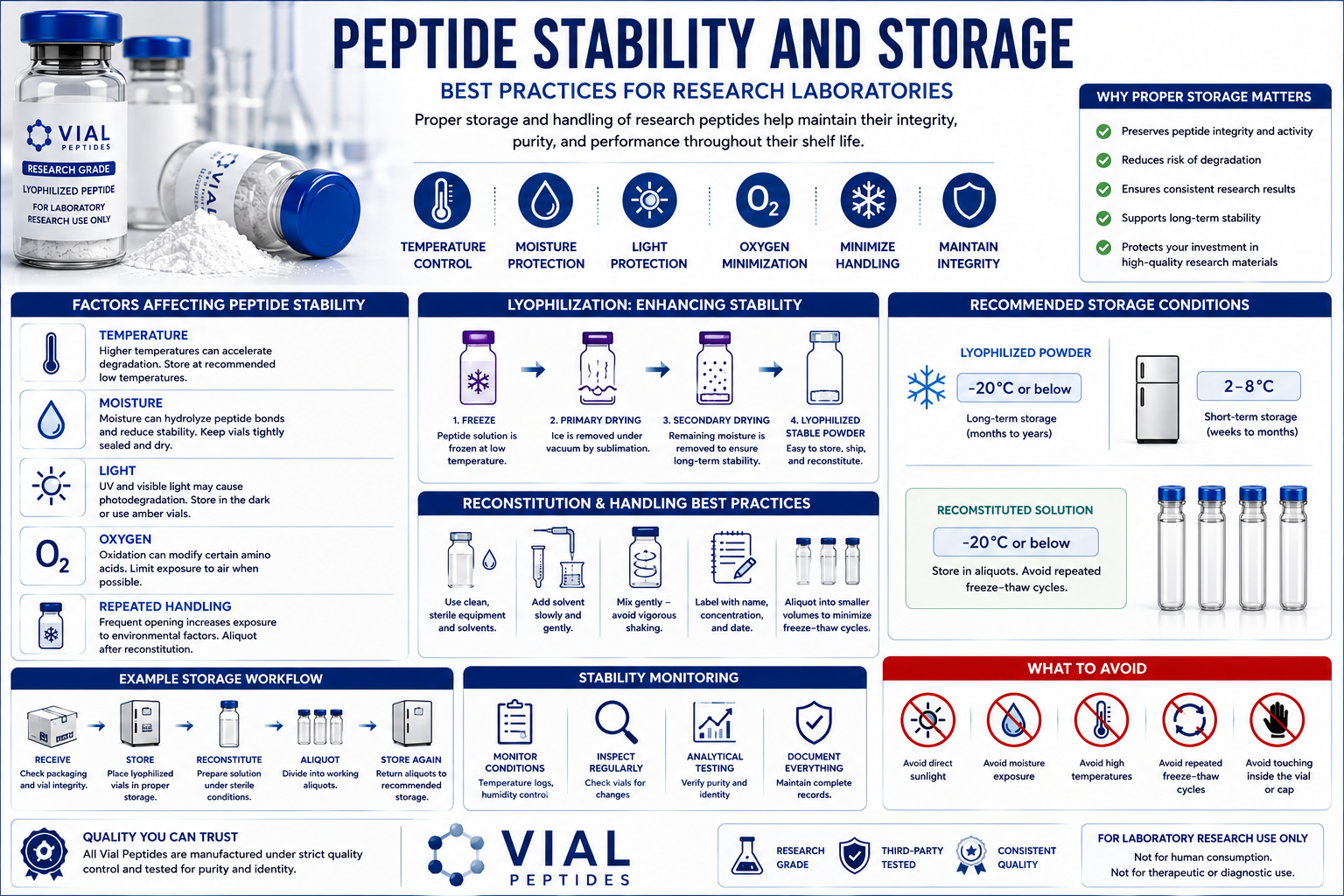
Peptide Stability and Storage: Best Practices for Research Laboratories
Table of Contents
- What Is Peptide Stability?
- Why Proper Storage Matters
- Environmental Factors That Affect Stability
- Lyophilization and Preservation
- Reconstitution and Handling
- Frequently Asked Questions
- Conclusion
PART 1
Peptide Stability and Storage: Best Practices for Research Laboratories
Understanding Peptide Stability and Storage is essential for maintaining the quality of research materials throughout their lifecycle. From the moment a peptide is manufactured until it is used in laboratory investigations, environmental conditions can influence its chemical integrity and long-term stability. Careful storage, handling, and documentation help researchers preserve sample quality while supporting consistent experimental outcomes.
Peptides are composed of amino acids joined by peptide bonds, and like many biological molecules, they may be affected by moisture, heat, light, oxygen, and repeated handling. Although many research materials are highly stable when stored appropriately, unsuitable storage conditions can increase the likelihood of chemical changes over time.
To reduce these risks, laboratories establish standardized storage procedures that protect samples from environmental exposure while maintaining traceability and quality documentation. Combined with modern manufacturing, purification, and analytical testing, proper storage practices help support reproducible scientific research.
This guide explains Peptide Stability and Storage, explores the factors that influence molecular stability, and outlines widely accepted laboratory practices for preserving research-grade materials.
What Is Peptide Stability?
Peptide stability refers to the ability of a peptide to maintain its chemical identity, structural integrity, and analytical quality over time when stored under appropriate conditions.
Researchers evaluate stability because it influences:
- Sample consistency
- Analytical reliability
- Experimental reproducibility
- Long-term storage performance
- Batch comparability
- Laboratory quality assurance
Understanding stability helps laboratories develop storage procedures that minimize unnecessary degradation.
Why Proper Storage Matters
Storage conditions play an important role in preserving research materials.
Appropriate storage helps laboratories:
- Maintain molecular integrity
- Reduce environmental exposure
- Improve long-term consistency
- Support reliable analytical results
- Protect manufacturing quality
- Preserve valuable research materials
Even well-manufactured products benefit from standardized storage and handling procedures.
Environmental Factors That Influence Stability
Several environmental conditions can influence the physical and chemical characteristics of research materials.
The most significant factors include:
Temperature
Higher temperatures may accelerate certain chemical reactions, while controlled low-temperature storage generally helps preserve long-term stability.
Moisture
Exposure to humidity may affect dry materials by introducing water into the sample. Laboratories therefore use tightly sealed containers and low-humidity storage environments whenever possible.
Light
Some compounds are sensitive to prolonged exposure to direct light. Amber containers or protected storage areas may help reduce unnecessary exposure.
Oxygen
Oxidation can alter certain amino acid residues under specific conditions. Proper packaging and sealed storage help minimize contact with atmospheric oxygen.
Repeated Handling
Frequent opening of containers or unnecessary handling increases opportunities for environmental exposure. Laboratories often divide larger batches into smaller working aliquots to reduce repeated access to the primary container.
Lyophilization (Freeze-Drying)
Many research peptides are supplied as lyophilized powders because removing water improves storage stability and simplifies transportation.
Lyophilization offers several advantages:
- Reduced moisture content
- Improved long-term preservation
- Easier transportation
- Lower risk of degradation during storage
- Greater flexibility for laboratory handling
For many research applications, the lyophilized form provides a practical balance between stability and convenience.
Packaging for Long-Term Protection
Packaging is an important part of preservation.
Research laboratories typically use containers designed to protect materials from environmental exposure.
Packaging systems may help reduce contact with:
- Moisture
- Oxygen
- Light
- Physical contaminants
- Temperature fluctuations
Carefully selected packaging complements appropriate storage conditions and supports long-term quality.
Establishing Standard Operating Procedures
Consistent handling practices reduce variability across research projects.
Many laboratories develop written procedures covering:
- Sample labeling
- Storage locations
- Temperature monitoring
- Container handling
- Documentation
- Inventory management
Standard operating procedures help ensure that all personnel follow the same quality-focused practices.
Key Takeaways
- Peptide Stability and Storage focuses on preserving the quality of research materials through proper handling and environmental control.
- Temperature, moisture, light, oxygen, and repeated handling are among the most important factors influencing long-term stability.
- Lyophilization improves preservation by reducing moisture and enhancing storage performance.
- Appropriate packaging and standardized laboratory procedures help protect valuable research materials.
- Good storage practices support reproducible scientific research and consistent analytical results.
Factors Affecting Stability, Laboratory Handling, and Quality Monitoring
Maintaining sample quality requires more than placing research materials in a storage unit. Laboratories develop comprehensive handling procedures that reduce unnecessary environmental exposure while preserving molecular integrity from manufacturing through analytical testing and experimental use. Careful planning, proper documentation, and standardized workflows all contribute to long-term stability.
Researchers understand that consistency in handling is just as important as consistency in manufacturing. For this reason, storage protocols are carefully integrated into laboratory quality management systems.
Temperature Control
Temperature is one of the most important factors influencing molecular stability.
Laboratories carefully monitor storage temperatures because chemical reactions generally occur more slowly under appropriately controlled conditions.
Temperature management helps laboratories:
- Preserve molecular integrity
- Reduce degradation risks
- Improve long-term consistency
- Protect analytical quality
- Support reproducible research
Continuous monitoring systems are commonly used to verify that storage conditions remain within established laboratory specifications.
Moisture Protection
Water can influence the stability of many laboratory materials.
For this reason, researchers minimize unnecessary exposure to humidity whenever possible.
Common moisture-control practices include:
- Using airtight containers
- Keeping containers tightly sealed
- Working in low-humidity environments
- Limiting container opening time
- Returning materials to storage promptly
Reducing moisture exposure helps preserve the physical and chemical characteristics of lyophilized materials.
Protecting Samples from Light
Some laboratory compounds may gradually change when exposed to prolonged direct light.
To reduce unnecessary exposure, laboratories often:
- Store materials in dark environments
- Use amber-colored containers when appropriate
- Limit exposure during handling
- Protect storage areas from direct sunlight
These precautions help maintain sample consistency during long-term storage.
Oxygen Exposure
Oxygen may contribute to oxidation of certain amino acid residues under specific conditions.
Although not every sequence is affected equally, laboratories commonly reduce oxygen exposure through careful packaging and storage.
Protective measures include:
- Proper container sealing
- Limited air exposure during handling
- Appropriate packaging materials
- Controlled storage environments
These practices complement other preservation strategies.
Freeze–Thaw Considerations
Repeated freeze–thaw cycles may introduce unnecessary stress to some research materials after they have been prepared for laboratory use.
To minimize repeated temperature changes, laboratories frequently divide prepared solutions into smaller aliquots before storage.
Aliquoting offers several advantages:
- Reduces repeated handling
- Preserves remaining material
- Improves workflow efficiency
- Supports consistent laboratory practices
This approach is widely adopted in research environments where repeated access to the same sample would otherwise be required.
Reconstitution Practices
Many research peptides are supplied as lyophilized powders and are prepared for laboratory work through reconstitution using an appropriate laboratory solvent selected for the intended research application.
Researchers typically focus on:
- Using clean laboratory techniques
- Measuring solvent volumes accurately
- Mixing carefully
- Recording preparation details
- Labeling prepared samples
Standardized procedures help improve consistency between experiments.
Sample Identification and Labeling
Accurate labeling is essential for effective laboratory management.
Typical labels include:
- Sample name
- Batch number
- Preparation date
- Storage location
- Analyst identification
- Study reference
Clear identification improves traceability while reducing the possibility of handling errors.
Inventory Management
Well-organized storage systems make it easier to monitor research materials throughout their lifecycle.
Laboratories often maintain inventory records containing:
- Sample quantity
- Storage conditions
- Batch information
- Expiration or review dates
- Analytical documentation
- Usage history
Digital inventory systems further improve organization and traceability.
Stability Monitoring Programs
Quality laboratories often evaluate stored materials periodically to observe long-term stability under controlled conditions.
Monitoring programs may include:
- Visual inspection
- Analytical testing
- Purity assessment
- Identity verification
- Documentation review
- Storage condition verification
These programs help identify changes that may occur during extended storage periods.
Documentation and Traceability
Every stage of sample handling should be documented carefully.
Researchers maintain records covering:
- Storage temperatures
- Container movements
- Analytical testing
- Sample preparation
- Quality reviews
- Laboratory observations
Comprehensive documentation strengthens quality assurance while supporting reproducible scientific research.
Why Standardized Handling Matters
Standardized laboratory procedures reduce variability introduced through inconsistent handling.
Consistent workflows help:
- Improve research reliability
- Protect valuable materials
- Reduce avoidable errors
- Strengthen quality systems
- Support reproducibility
- Simplify laboratory operations
Well-designed procedures ensure that every researcher follows the same handling practices.
Key Takeaways
- Temperature, moisture, oxygen, light, and repeated handling all influence long-term stability.
- Careful storage procedures help preserve analytical quality and molecular integrity.
- Aliquoting can reduce repeated freeze–thaw exposure after sample preparation.
- Accurate labeling, inventory management, and documentation improve laboratory traceability.
- Stability monitoring programs support quality assurance and long-term consistency.
Future Developments, Frequently Asked Questions, and Conclusion
Laboratory storage practices continue to evolve alongside advances in peptide chemistry, analytical science, and biotechnology. Modern research facilities increasingly rely on automated monitoring systems, digital inventory platforms, and improved packaging technologies to preserve sample quality while supporting long-term scientific investigations.
As research expands across molecular biology and analytical chemistry, maintaining sample integrity throughout storage and handling will remain a fundamental part of laboratory quality management.
Emerging Technologies in Sample Preservation
Scientific innovation continues to improve how research materials are stored, monitored, and managed.
Several technological developments are shaping the future of laboratory preservation.
Smart Temperature Monitoring
Many laboratories now use digital monitoring systems that continuously record storage temperatures.
These systems help researchers:
- Detect unexpected temperature changes
- Maintain continuous monitoring records
- Improve laboratory oversight
- Support quality management programs
- Reduce the risk of storage-related errors
Continuous monitoring provides greater confidence that research materials remain within established storage conditions.
Advanced Packaging Technologies
Packaging materials continue to improve as manufacturers develop better barriers against environmental exposure.
Modern packaging systems are designed to:
- Reduce moisture penetration
- Limit oxygen exposure
- Protect against light
- Improve transport stability
- Maintain container integrity
These advances complement laboratory storage procedures and contribute to long-term sample preservation.
Digital Inventory Systems
Laboratories increasingly manage research materials using electronic inventory platforms.
These systems simplify:
- Sample tracking
- Batch identification
- Storage location management
- Documentation
- Quality records
- Usage history
Digital management improves organization while reducing administrative workload.
Automation in Laboratory Storage
Automation is becoming more common in research facilities.
Automated storage systems can:
- Organize inventory efficiently
- Reduce manual handling
- Improve traceability
- Monitor storage conditions
- Support laboratory workflows
These technologies increase efficiency while helping laboratories maintain standardized handling procedures.
Best Practices for Long-Term Sample Management
Successful laboratories combine appropriate storage conditions with consistent operational procedures.
Common best practices include:
- Following written laboratory protocols
- Monitoring storage conditions routinely
- Maintaining complete documentation
- Reviewing inventory regularly
- Protecting materials from unnecessary environmental exposure
- Verifying sample identity before use
Together, these practices support reliable scientific research and high laboratory standards.
Frequently Asked Questions
What does peptide stability mean?
Peptide stability refers to the ability of a research material to maintain its chemical identity, structural integrity, and analytical quality during storage and handling under appropriate laboratory conditions.
Why are many research peptides supplied as lyophilized powders?
Lyophilization removes water from the material, helping improve long-term stability, simplify transportation, and support laboratory storage.
Which environmental factors affect stability?
Temperature, moisture, oxygen, light, and repeated handling are among the most important factors that laboratories consider when developing storage procedures.
Why is accurate labeling important?
Clear labeling improves sample identification, supports inventory management, reduces handling errors, and strengthens laboratory traceability.
What is aliquoting?
Aliquoting is the practice of dividing prepared material into smaller portions. This approach helps reduce repeated handling and limits unnecessary freeze–thaw exposure after preparation.
Why is documentation important?
Detailed records allow laboratories to monitor storage conditions, track inventory, review analytical data, and maintain quality management systems.
How is laboratory storage expected to improve in the future?
Future developments are expected to include smarter monitoring systems, improved packaging technologies, greater automation, and more advanced digital inventory management platforms.
Conclusion
Peptide Stability and Storage are essential components of laboratory quality management. Proper handling, environmental control, and standardized storage procedures help preserve the integrity of research materials from manufacturing through analytical testing and scientific investigation.
Modern laboratories combine carefully controlled storage environments with comprehensive documentation, digital inventory systems, and routine quality monitoring to maintain consistency over time. Protective packaging, lyophilization, and thoughtful handling practices further reduce unnecessary environmental exposure while supporting reliable laboratory workflows.
As peptide science continues to advance, new monitoring technologies, automation, and improved preservation methods will continue enhancing laboratory efficiency and quality assurance. These ongoing developments will strengthen reproducibility while supporting high standards across peptide manufacturing, biotechnology, molecular biology, and analytical chemistry.
Key Takeaways
- Peptide Stability and Storage focus on preserving research materials through appropriate environmental control and standardized laboratory procedures.
- Temperature, moisture, oxygen, light, and repeated handling are key factors that influence long-term stability.
- Lyophilization, protective packaging, and careful handling help maintain sample quality.
- Accurate documentation, inventory management, and digital monitoring strengthen laboratory quality systems.
- Future innovations in automation and smart storage technologies will continue improving preservation practices.