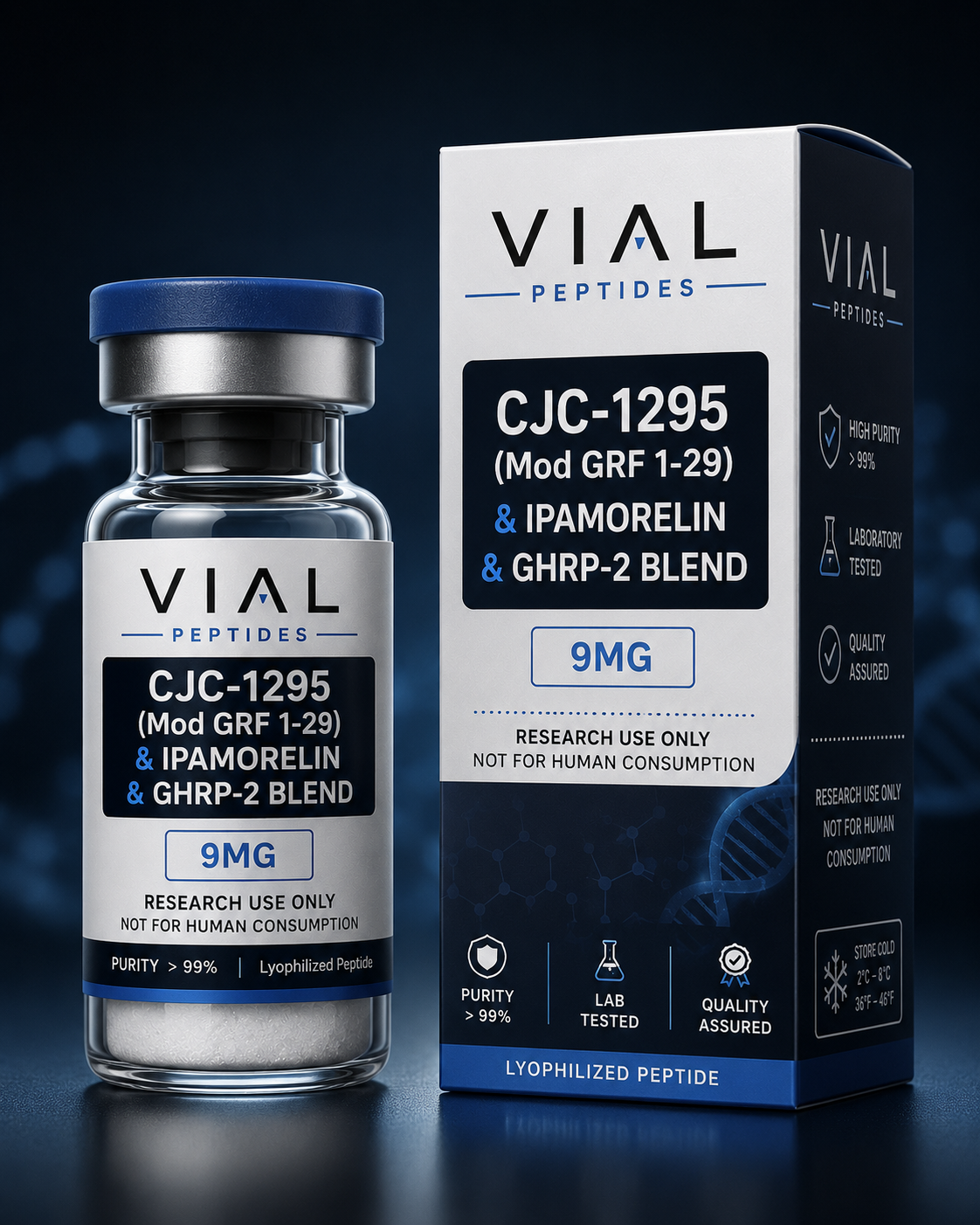
TB-500 Quality Control Standards
TB-500 Quality Control Standards play a vital role in ensuring that every research peptide meets rigorous laboratory requirements for identity, purity, consistency, and reliability. From raw material inspection to final analytical testing, quality control procedures help verify that each production batch is manufactured according to established scientific standards.
At Vial Peptides Labs, quality is built into every stage of the manufacturing process. Our TB-500 research peptides undergo comprehensive analytical evaluation, allowing researchers to work with products supported by reliable documentation and consistent manufacturing practices.
Why Quality Control Matters
Quality control is the systematic process of verifying that a peptide meets predefined specifications before it is released for laboratory research. Consistent quality helps researchers obtain reproducible experimental results while reducing the risk of impurities, contamination, or manufacturing inconsistencies.
Effective quality control provides several important benefits:
- Confirms peptide identity.
- Verifies product purity.
- Ensures batch-to-batch consistency.
- Detects impurities or synthesis by-products.
- Supports reliable laboratory research.
- Improves product traceability.
By implementing strict quality standards, peptide manufacturers help maintain confidence in every production batch.
Quality Control Throughout Manufacturing
Quality assurance begins long before the final product reaches the laboratory. Every stage of peptide production contributes to overall quality.
Raw Material Inspection
Manufacturing starts with carefully selected raw materials. Incoming amino acids, reagents, and laboratory supplies are evaluated to ensure they meet predefined specifications before production begins.
Controlled Peptide Synthesis
TB-500 is manufactured using Solid-Phase Peptide Synthesis (SPPS). Automated synthesis equipment helps produce highly accurate amino acid sequences while minimizing manufacturing variation.
Throughout synthesis, laboratory technicians monitor reaction efficiency and process consistency to maintain product quality.
Purification
After synthesis, TB-500 is purified to remove incomplete peptide chains, residual reagents, and synthesis by-products. Advanced purification techniques improve overall peptide purity before analytical testing begins.
Lyophilization
The purified peptide is freeze-dried through lyophilization, removing moisture to improve long-term stability and simplify laboratory storage. Every lyophilized batch is inspected before packaging.
Analytical Quality Testing
Once manufacturing is complete, every batch undergoes analytical testing to verify identity, purity, and consistency.
High-Performance Liquid Chromatography (HPLC)
HPLC is one of the most important analytical methods used during peptide quality control. It separates peptide components and measures overall purity while helping identify impurities or degradation products.
Mass Spectrometry (MS)
Mass spectrometry confirms the molecular weight and identity of TB-500. This testing ensures that the synthesized peptide matches the expected molecular composition.
Visual Inspection
Laboratory personnel examine every batch for:
- Proper vial integrity
- Appearance of the lyophilized powder
- Packaging quality
- Label accuracy
Visual inspection provides an additional level of quality assurance before release.
Batch Verification
Every production batch is assigned a unique batch number for complete traceability. Batch verification allows manufacturers to document production records, analytical results, and quality control procedures for each individual lot.
This traceability supports transparency and simplifies quality investigations if required.
Certificate of Analysis (COA)
Each TB-500 batch is accompanied by a Certificate of Analysis (COA) that summarizes laboratory testing results.
A typical COA includes:
- Product name
- Batch number
- Manufacturing date
- Purity results
- Analytical methods
- Molecular identity confirmation
- Quality control approval
The COA provides researchers with documented evidence that the peptide has undergone comprehensive laboratory evaluation.
Laboratory Standards
Maintaining high laboratory standards requires careful attention to every aspect of manufacturing.
Important quality practices include:
- Controlled laboratory environments.
- Standard operating procedures (SOPs).
- Equipment calibration.
- Personnel training.
- Documentation of manufacturing records.
- Routine quality audits.
- Environmental monitoring.
These procedures help maintain consistent production quality over time.
Packaging and Storage Quality
Quality control continues after manufacturing is complete. Secure packaging protects TB-500 from environmental exposure during storage and transportation.
Recommended practices include:
- Moisture-resistant packaging.
- Proper vial sealing.
- Protective labeling.
- Controlled storage conditions.
- Temperature monitoring during shipping when appropriate.
These measures help preserve peptide integrity until it reaches the research laboratory.
Why Choose Vial Peptides Labs?
At Vial Peptides Labs, quality is more than a final inspection—it is an ongoing commitment throughout the manufacturing process.
Researchers choose our laboratory because we provide:
- High-purity research peptides.
- Advanced peptide synthesis.
- Comprehensive HPLC purity testing.
- Mass spectrometry verification.
- Strict batch consistency.
- Certificate of Analysis (COA).
- Secure laboratory packaging.
- Reliable manufacturing documentation.
- Professional customer support.
Every TB-500 batch is manufactured with precision to help support consistent laboratory research.
Frequently Asked Questions
What are quality control standards?
Quality control standards are procedures used to verify that a peptide meets predefined specifications for purity, identity, consistency, and manufacturing quality.
Why is HPLC testing important?
HPLC measures peptide purity and helps identify impurities or degradation products before the peptide is released.
Why is mass spectrometry used?
Mass spectrometry confirms molecular weight and peptide identity, ensuring the synthesized peptide matches the intended sequence.
What information is included in a Certificate of Analysis?
A COA typically includes the batch number, purity results, analytical methods, molecular identity confirmation, and quality approval information.
Why is batch consistency important?
Consistent manufacturing helps researchers obtain reliable and reproducible laboratory results across multiple experiments.
Conclusion
TB-500 Quality Control Standards are essential for producing reliable research peptides that meet demanding laboratory requirements. Comprehensive quality assurance begins with raw material inspection and continues through synthesis, purification, analytical testing, packaging, and final documentation. At Vial Peptides Labs, every batch of TB-500 is supported by rigorous quality control procedures, advanced analytical testing, and complete batch traceability, giving researchers confidence in the consistency and reliability of every product supplied.